Saturday, March 20, 2021

Friday, March 19, 2021
11 Scary Signs This COVID-19 Houseplant Craze Is Out of Control

Getty Images
During the past year of coronavirus-induced quarantine, we’ve all had to find a hobby. Learning calligraphy? Playing lawn golf? Building furniture for squirrels? Hey, whatever kept you going through the long, tedious days.
And then there were those (like me) who brought the outdoors indoors, in the form of potted plants. Big ones, little ones, even itty-bitty ones.
And after 365-plus days of vegetation co-habitation, many Americans are now full-on obsessed with their plants.
I get it. I have plants ranging from a 15-year-old money tree to the seven new cactuses I acquired during the pandemic—for a total of 26 green friends, more plants than I can responsibly care for, try as I might.
Plant nerds have a term for those among us with an obsessive number of plants: “hoarder culturists.” Are you a hoarder culturist, or at risk of becoming one? Here are the top signs you’re plant-obsessed.
1. You live (and sleep) in a jungle
Talk about #greengoals. Instead of sleeping under the stars, you sleep under the roots.
If you need a machete to carve a path from one room to another, it’s a sign you should truly cut back on your plant habit.
2. You shower with your plants
Rub-a-dub-dub, you like your plants near your tub. And there’s good reason for having plants in your bathroom: It makes watering said plants a snap, and vegetation of many species (such as ferns) will bask in the added humidity.
Still, if most of your water usage starts flowing toward watering your plants rather than to your personal hygiene, you might have a problem. (And no, reasoning that no one can see you or smell you other than your “green friends,” due to quarantine, is not a valid reason to skip showers).
3. You freak out when you see a brown (or yellow) leaf
Taking care of oftentimes persnickety plants is just as wonderfully distracting as it is decidedly therapeutic.
You can nerd out over a new leaf growing, and you can freak out when you see said leaf turn brown or yellow. If only there were a plant ER to rush your ailing plants to.
4. You refer to yourself as a ‘plant mom’ (or dad) and to your plants as your ‘babies’
https://www.instagram.com/p/CLe0ngsgE62/
Begone, cliché of the crazy cat lady. Enter a bright new era of plant moms and dads.
Plant parents celebrate their plant babies as heartily as other parents celebrate their child’s soccer win. And that’s not that crazy, is it? (OK, fine. There is a #crazyplantladyisthenewcrazycatlady hashtag out there.)
5. You give your plants names
Some plants are easy to name. A philodendron can easily become Phyllis D. Endon.
But the oh-so-popular rubber tree plant? Time to break out the book of baby names and start compiling a Top 10 list. Bob just won’t cut it.
6. You have a plant wall
Who needs paperback books and random knickknacks on shelving when you can have plants, glorious plants? The chlorophyll alone in this home must be simply intoxicating.
7. You talk to your plants and think of them as your ‘friends’
You: Hello, my green beauty. How’s your morning?
Plant: …
You: I get it, you haven’t eaten yet. Wait here while I fetch you some delicious mist.
Plant: (Smiles imperceptibly.)
8. You post plant throwback pics
Old prom photos? You and your childhood friends? That dated hairstyle? All pale when you can post a throwback snapshot of you with a giant pothos from your 1980s childhood.
9. You take plant family portraits
Trying to take a good family photo is one of the most frustrating tasks in the universe. No one will stand still, and cousin Leon always blinks.
So long, unruly mob of siblings and cousins. Hello, plant family. Everyone say: “Acidic soil!”
10. You get a plant tattoo
As someone with more than one macramé plant hanger and a philodendron (which is acting up), I feel that this tattoo hits the spot.
What’s better than a plant that never needs water, looks good in direct and indirect sun, and that you can take with you on vacation?
11. Your house looks like, well, a houseplant
You know you’re in deep when you not only decorate with plants, but you base your entire color scheme on plant life. Who said it isn’t easy being green? Clearly, not a plant person.
The post 11 Scary Signs This COVID-19 Houseplant Craze Is Out of Control appeared first on Real Estate News & Insights | realtor.com®.
Thursday, March 18, 2021
‘Design Star: Next Gen’ Reveals One Thing We Should All Bring Into Our Homes

HGTV
There are only five designers left in competition on “Design Star: Next Gen,” so the pressure is on when they’re asked to design not one but two spaces.
In the episode “The Great Indoors/Outdoors,” the final five—Arianna Danielson, Chris Goddard, Justin Williams, Eli Hariton, and Carmeon Hamilton—are asked to design indoor and outdoor spaces. Judges Jonathan Adler and Lauren Makk are joined by guest judge Maurice Harris, master florist and founder of luxury floral studio Bloom & Plume. So these designers will need to take special care to include florals.
Read on to see how these designers attempt to impress the judges, and learn some smart decor lessons for spaces both inside and out.
Use burlap for an earthy (and inexpensive) touch

Discovery+
Goddard decides to design a Moroccan-inspired space, with a colorful living room and a courtyard with a beautiful fountain and tons of plants. Right away, the judges are impressed with the interior, which includes chocolate-brown walls and a burlap chair rail that looks wonderfully earthy.
“It’s an absolutely great way to use a cheap product in an effective way,” Makk says of the burlap.

Discovery+
To tie together the interior and exterior, Goddard uses the same burlap to wrap some of the plants outside, which the judges love.
“That’s kind of a nice way of tying the inside with the outside and vice versa,” Harris says.
This proves that inexpensive products, used creatively, can make a space stand out.
Make sure your furnishings are the right size

Discovery+
Danielson chooses to do a unique bedroom with a fabulous lounge area outside, which includes a luxurious bathtub. And while her outdoor space is chic and her florals fantastic, the judges have issues with the bedroom.
The judges point out the large side tables, saying that they dwarf the bed.
“Scale is the biggest problem in this room,” Adler says, “and I feel like you as a designer are big and in your face. I just kind of want a big gesture.”
Adler even points out that the frames on the walls, which are creatively filled with flowers, seem too small for the space.
Danielson’s room proves that design isn’t just about color and shape—it’s about scale, too. Just like how too-large furniture can make a space feel cramped, too-small furniture can make a space feel unimpressive.
Color is the one thing we should all bring into our homes right now

Discovery+
Hamilton realizes that no one in the competition has done a white space yet, so she wants to give it her best shot. In her living room, she uses white walls, white and black furnishings, and lush greenery.
The judges are impressed with Hamilton’s clean lines and modern look. However, Harris thinks she missed an opportunity for bold florals.
“I wish you would’ve brought in a little color with, like, the floral,” Harris says, “because I think that’s what’s so nice about a white space—you can really have a lot of fun with that.”
It seems that Hamilton’s space, while elegant, is just a little too plain. It’s a good lesson in not being afraid to use color.
Plaid makes a bold statement wall—or accent pillow

Discovery+
While Hamilton’s space feels a little safe, Williams impresses the judges with a bold indoor-outdoor office that he imagines to be a unique workspace for an executive.
To give the space a professional yet playful look, Williams puts up plaid wallpaper on the back wall. Right away, the judges love the feature.
“That plaid back wall is genius,” Adler says. “I never would’ve thought of it. I love it.”

Discovery+
To finish the space, Williams includes matching plaid pillows for the couch outside. This detail makes the space feel unified and well-planned. It’s a simple detail that makes the space feel elevated.
Houseplants don’t belong everywhere

Discovery+
Hariton may have won two challenges in a row, but he’s worried about this one. The judges have told him, over and over, that he has a problem with awkward accessories. So the pressure is on to impress.
Hariton does his best to show off his attention to detail, particularly with a creative chandelier. Still, it seems his plans fall short.
While Adler points out that the chandelier itself is interesting, the plants look strange perched on top.
“The chandelier’s a clean graphic,” Adler says. “Make the plants have a reason for being.”
Harris also disapproves of the feature, pointing out that those suspended plants aren’t even in real pots. They’re just stuck in the plastic cups they came in.
“It’s all about the finishings on those things,” Harris says.
‘Design Star: Next Gen’: Who wins this round?
The judges have a tough job this week because while these indoor-outdoor spaces are lovely, they all have some room for improvement. However, the judges decide to name Goddard and his fabulous burlap chair rail the winner.
The judges also reveal that Danielson’s designs weren’t up to snuff, so she will be eliminated this round.
Still, Danielson goes with her head held high.
“I’ve stood out in this competition as someone who’s just different,” she says, “and I’m proud of being a different kind of designer.”
The post ‘Design Star: Next Gen’ Reveals One Thing We Should All Bring Into Our Homes appeared first on Real Estate News & Insights | realtor.com®.
12 Vegetables and Flowers You Can Plant Outside Right Now—Even Before the Last Frost
Getty Images
Finally, at last, the Longest Winter Ever will soon be in our rear-view mirror—which means it’s a great time to kick-start your spring garden (or victory garden part deux).
“In most of the country, late March and early April signify the start to the gardening season,” says Amy Enfield, a horticulturalist for Miracle-Gro.
Worried that temperatures may plunge below freezing again and kill your young greenery in a last-gasp frost? It turns out your concerns are unfounded since, Enfield points out, “certain hardy plants and vegetables can withstand chilly nights and late-season frosts.”
In fact, certain vegetables and herbs actually do best when planted in early spring, says Sandra Steineke, director of merchandising at Gurney’s Seed & Nursery. The early planting gives the plants a chance to mature, leading to higher yields and better quality produce.
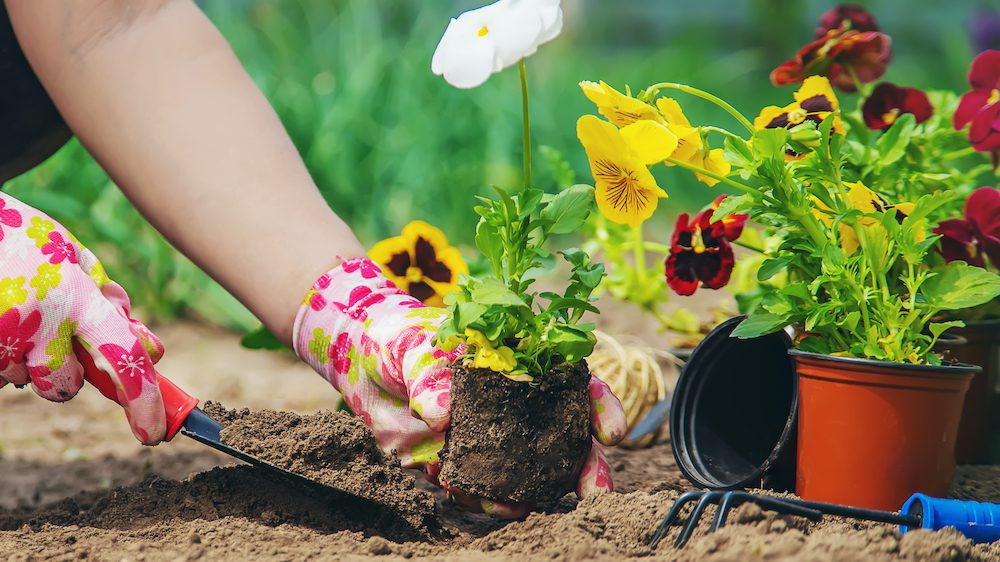
More good news: Vegetables aren’t the only plants that flourish when planted in March and April. Many flowers also perform best in the cooler weather of early spring, since they tend to wither in the hot, dry temperatures of summer.
So what exactly should you plant right now? Whether you’re planting seeds or established plants, we asked gardening experts to discuss which vegetables and flowers you need to get in the ground now, and some best practices for planting.
Vegetables you can plant in March
Here are the fruits and vegetables you should plant now:
- Leafy greens like Swiss chard, spinach, kale, collards, and lettuce
- Cole crops such as broccoli, cauliflower, Brussels sprouts, and cabbage
- Tuber vegetables, including radishes, beets, turnips, carrots, potatoes, and onions
- Asparagus
- Rhubarb
- Strawberries (Note: Wait to plant them until after the last chance of frost in your region.)
- Herbs (“There are several cool-weather herbs like parsley, cilantro, and chives,” says Enfield.)
Flowers you can plant in March
Several types of flowers do their best in the cool weather of early spring, Enfield says. They include the following:
- Pansies
- Violas
- Snapdragons
- Sweet William
- Sweet alyssum
“Adding them to your garden in March or early April provides an early pop of color, as well as provides beneficial nectar for early-season pollinators,” Enfield says.
Is your soil ready for plants?
No matter what you plant, make sure the soil is ready—and that means unfrozen and dry.
“For instance, planting potatoes, onions, or seeds in cold, wet ground that will not dry out for weeks and weeks will cause these items to rot before they sprout,” explains Steineke.
If you’re eager to plant but your soil isn’t quite dry, plant flowers and vegetables in containers first, and then transfer them into the ground later.
What happens if you have another frost?
A few warm, sunny days might fool you into thinking winter is over. But a frost or two might still be likely in late March.
Many cool season plants can withstand a light frost, Enfield explains.
“Semihardy vegetables like beets, carrots, cauliflower, lettuce, Swiss chard, and potatoes will survive light frosts and temperatures down in the upper 20s or low 30s,” she says. “Hardy vegetables like broccoli, Brussels sprouts, cabbage, radishes, spinach, and turnips will survive harder frosts and temperatures down to the low 20s.”
How to protect your plants from frost
To protect your early spring plantings from a cold night or frost threat, cover the plants in the early evening with an old bedsheet, newspapers, or plant cone. Or you can move plants in containers under a covered porch or into a garage.
Just don’t forget to remove the coverings in the morning, or they won’t get enough sunlight.
How much to water plants
To keep your plants alive and well, water them about an inch a week. Check your plants for water every few days by sticking your finger into the soil near the plant an inch deep. Water the plants if the soil is dry. If it’s still damp, wait a day or two.
“Rain tends to be plentiful in the spring, so you may find you don’t need to water hardly at all,” Enfield says.
Fertilize or feed your plants regularly, too, following the instructions on the fertilizer label for how often and how much your plants need.
“This will instantly feed your vegetables, flowers, and other plants, and give them the nutrients they need to grow bigger and more beautiful,” Enfield says.
The post 12 Vegetables and Flowers You Can Plant Outside Right Now—Even Before the Last Frost appeared first on Real Estate News & Insights | realtor.com®.
Wednesday, March 17, 2021
Got a Case of Renovation Regret? Steve and Leanne Ford Do, Too

HGTV
Leanne and Steve Ford are design pros, but in the latest “Home Again With the Fords,” they commit a rookie mistake: They change their minds midrenovation.
In the episode “Sister-in-Law Suite,” this brother-and-sister team wants to create a guesthouse where Leanne’s sister-in-law, Ali, can kick back when visiting them in Pittsburgh. Originally, Leanne planned to give this home a colorful English garden feel; but halfway through, she decides to switch gears and aim for a more subtle, modern style.
Suddenly, the renovation is flipped on its head, as the Fords scramble to redo everything they’ve already done. And with just $30,000 to renovate the whole house, they risk running out of money.
Nonetheless, Steve and Leanne manage to pull this house together on budget. Here’s how they do it, which contains some wise take-home lessons for anyone who ends up suffering a case of renovation remorse. (Hey, it happens!)
Want a different color oven? Cover it in vinyl

HGTV
Once Leanne decides to change the style in this house, she realizes that the green oven, which she ordered specifically with the English garden style in mind, won’t work.
“It’s awesome and I love it, but it doesn’t match the rest of what’s happening now,” Leanne says.

HGTV
Rather than get a whole new stove, though, Leanne asks Steve to cover it in pink vinyl. As it turns out, it’s entirely possible to give appliances a face-lift this way, and the new color works great.
Embrace different flooring as a nod to a home’s past

HGTV
After busting down a wall, Leanne realizes that there is empty space between the original living room parquet and the kitchen tile.
While most designers would rip up all the flooring and lay down a new one so it’s consistent, Leanne decides that’s not possible due to her limited budget. Instead, she patches the empty spaces with dark tile, highlighting the different flooring instead of replacing them.
As Leanne explains, it’s all about the history of the house.
“You can see the floor as it used to be,” she says. “I didn’t want to do a perfect floor. I kind of liked that there was some remnants of the past in the floor.”
Raise ceiling joists to open up a room

HGTV
This guesthouse is deceptive. From the outside, it looks like a tiny cottage; but inside, it has three large bedrooms. Still, Leanne wants to make this old home feel even bigger by opening up the ceiling.
“If this house was built as well as I think it was,” Leanne says, “there’s gorgeous joists from the floor upstairs. I want that exposed in here.”
Steve opens up the ceiling, but there are so many joists, and they’re so low, that they make the space feel like it still has a low ceiling.

HGTV
So, in order to improve the look and maintain structural integrity, they decide to raise the joists closer to the peak of the roof.
“By raising the joists, now visually when you walk in you feel the height of the space,” Leanne says.
Simplify a busy room with white paint

HGTV
Once Leanne decides to go in a new design direction, she’s stuck with a hodgepodge of design features, from the colorful stove to the textured ceiling to the wild floor. It feels like a lot for one space. So Leanne decides to clean up the look by painting nearly everything white.
“I’ve got to scale back and simplify,” Leanne says. “And to me, the best way to simplify has always just been white paint.”
Stencils can make a dated bathroom look modern and new

This bathroom was just plain dated.
While Ali is excited about the house, she’s not thrilled with the dated bathroom upstairs—and she’s surprised when Leanne says she wants to keep it more or less the same.
Leanne assures Ali that this old bathroom, and the dated tile, can look new again with just a few adjustments. She replaces the old faucet with a sleek, updated one and then paints the walls with a geometric green stencil.
The stencil is especially great because it brings some modern shapes into the room, while the green color complements the bathroom’s old-fashioned charm.
“We just put stenciling in the wall and this new modern sink. And now the tile feels really good,” Leanne says proudly when the bathroom is finished.

HGTV
The post Got a Case of Renovation Regret? Steve and Leanne Ford Do, Too appeared first on Real Estate News & Insights | realtor.com®.
How To Protect Your Home (and Yourself) From Fire Ants
Getty Images
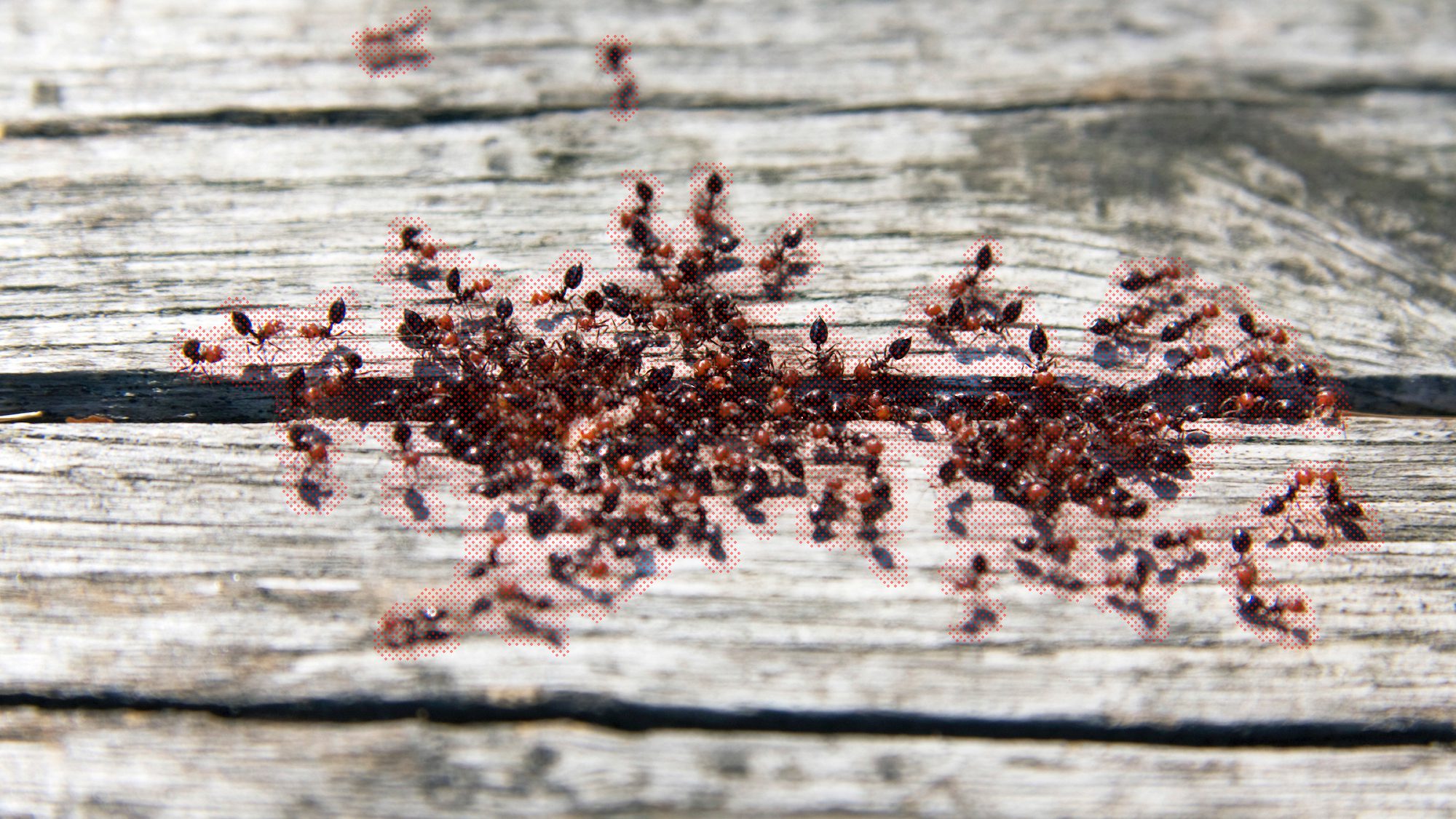
If you’ve been bitten by one, you know how much it hurts. Fire ants get their name from their burning sting, and even though they’re tiny, they’re vicious if they get on your property. Fire ants are most active during spring and fall, when the weather is warm and the soil heats up. With spring upon us, you’ll want to protect your family and home from these tiny red pests.
“This species causes significant agricultural loss in addition to medical and environmental harm. There are several actions you can take to protect yourself from being stung or experiencing damage on your property,” says David Price, technical director and associate certified entomologist at Mosquito Joe.
Fire ant colonies can have a single queen or a small group of queens, and can expand to thousands of red ant soldiers in just a month. To keep the troops at bay, here are a few tips from the experts.
Look for and target mounds
Targeting individual mounds in the early morning or early evening, when fire ants are foraging for food, can be a good way to get fire ants under control.
Price says fire ants often build mounds at the base of trees, beside brick walls, under patio slabs, in lawns, or next to concrete walks. They also may build mounds beside or under the foundation and electrical or utility housings.
“If you see a mound of fluffy, worked soil that has no opening in the center and is several inches above the ground, it is most likely a fire ant mound,” says Price.
To treat a mound, he recommends drenching it with several gallons of hot water, or insecticide mixed with several gallons of water. Another option is to use surface application, using dust or granular insecticide that can be applied over the top of the mound and then watered into the soil.
Another solution is to sprinkle poisoned bait around the mound. Foraging ants will then take the bait back to the colony to feed upon it. While this may be slower-acting, Price says it can be more effective than drenching or surface application “because the workers will feed the bait to the queen and brood, thus gaining effective control of the colony.”
Eliminate standing water and moisture
Fire ants are attracted to moisture and can make it into rooftops and wall voids, which means all leaks should be repaired and external faucets should be checked so that they no longer drip.
“Fire ants require water to survive and are often found near creeks, runoff ditches, streams, rivers, ponds, lakes, and other bodies of water,” says Josh Matta, senior biologist and insect expert at Spectrum Brands. “Eliminating standing water surrounding your home can be a smart preventive measure.”
Price adds that surveying the property and eliminating areas of water collection will assist in minimizing ant movement to the inside of the house, too.
Keep the garden tidy
Keep trees and shrubs trimmed and straw and mulch far from the home. Remove ripe fruit from trees, and pick up any fallen fruit.
“Fire ants can wreak havoc on a garden. This can occur throughout the year and can cause significant damage to soybean crops, citrus, corn, okra, bean, cabbage, cucumber, eggplant, potato, sweet potato, peanut, sorghum, sunflowers, and more,” says Matta.
He says a well-kept garden that is frequently tilled may get fewer fire ant mounds, because tilling disturbs the fire ants and causes them to move. He also says homeowners should turn mulch or other bedding material every couple of weeks to keep moisture retention low and discourage nest building.
Seal points of entry in exterior walls
Fire ants are very small, so it’s easy for them to get inside your home through any hole in a wall, cracks in siding, or HVAC systems. So patch holes and install door sweeps on exterior doors and garage doors.
“It is important to seal points of entry to help prevent an indoor infestation. Fire ant colonies can make their way into homes in search of food, water, and nesting sites,” says Matta.
He says they can enter through cracks and crevices, especially during extreme outdoor heat, drought, or flooding rains. He says they can make their way into utility rooms, bathrooms, or near the water heater where they have access to the area from outside.
Matta says when treating fire ants with prevention products ($4, Lowes), apply a 3-foot to 5-foot band of granules next to the house foundation for protection.
Eliminate food sources
To prevent red ants from invading your house, it’s important to eliminate all possible food sources. Red ants feed on animal and vegetable sources, which can include insects, earthworms, and spiders. Price says they will also collect honeydew and forage for sweets, proteins, and fats inside homes.
“Good housekeeping, being aware of food sources, and eliminating them on the outside of the home will reduce the chance of a colony,” he says.
The post How To Protect Your Home (and Yourself) From Fire Ants appeared first on Real Estate News & Insights | realtor.com®.