Friday, September 25, 2020

Lessons From Listings Photos: How This House Sold in a Month During a Pandemic

lessons from listing photos houston

realtor.com

It doesn’t matter how perfect your home is—if your listing photos don’t stand out, potential buyers won’t come by to take a look. In our series “Lessons From Listing Photos,” we dissect the smart updates sellers have made to their homes, and how their listing pictures highlight the home’s best assets.

There is no perfect time to sell a house—anyone who’s ever put a property on the market will tell you that. Sure, tradition tells us that selling in spring might be ideal. But at the end of summer? During a pandemic?

These extra obstacles didn’t stop the owners of a cute family home in Houston from putting up a “For Sale” sign. Perhaps their confidence came from knowing they’d made home improvements that would appeal to buyers. Regardless of their motivation, this sale was a success: The three-bedroom, two-bathroom home went on the market in August 2020, and was sold just one month later.

So what interior and exterior enhancements did the owners do to make sure their home sold in a hurry? We went to real estate and design experts to discuss the changes made to this house—and how you can pull off a similar transformation in your own space.

Front exterior
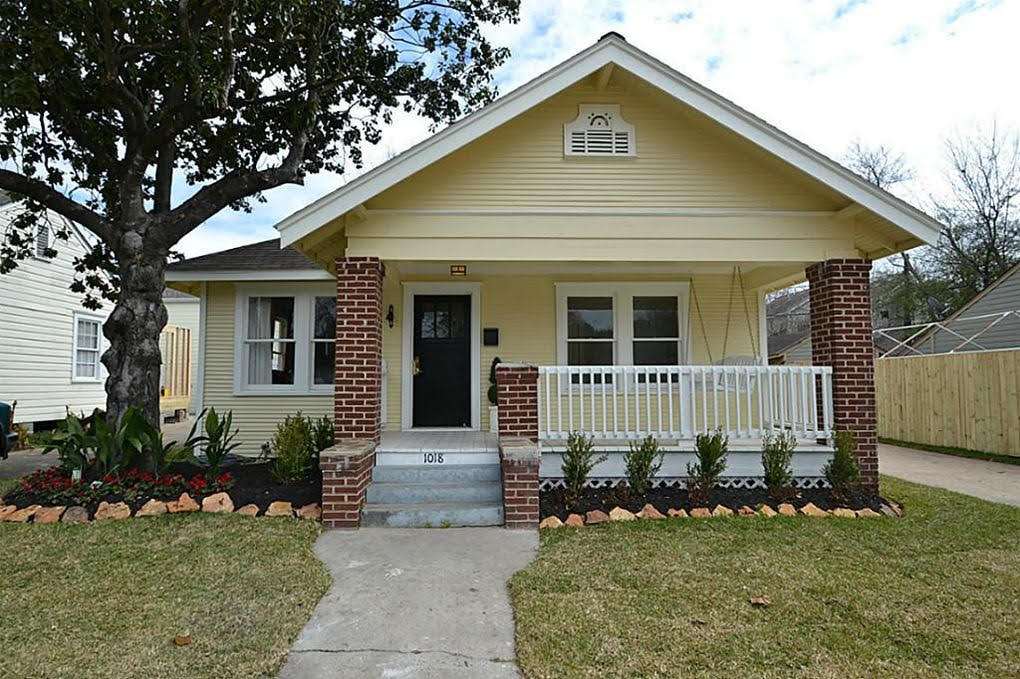
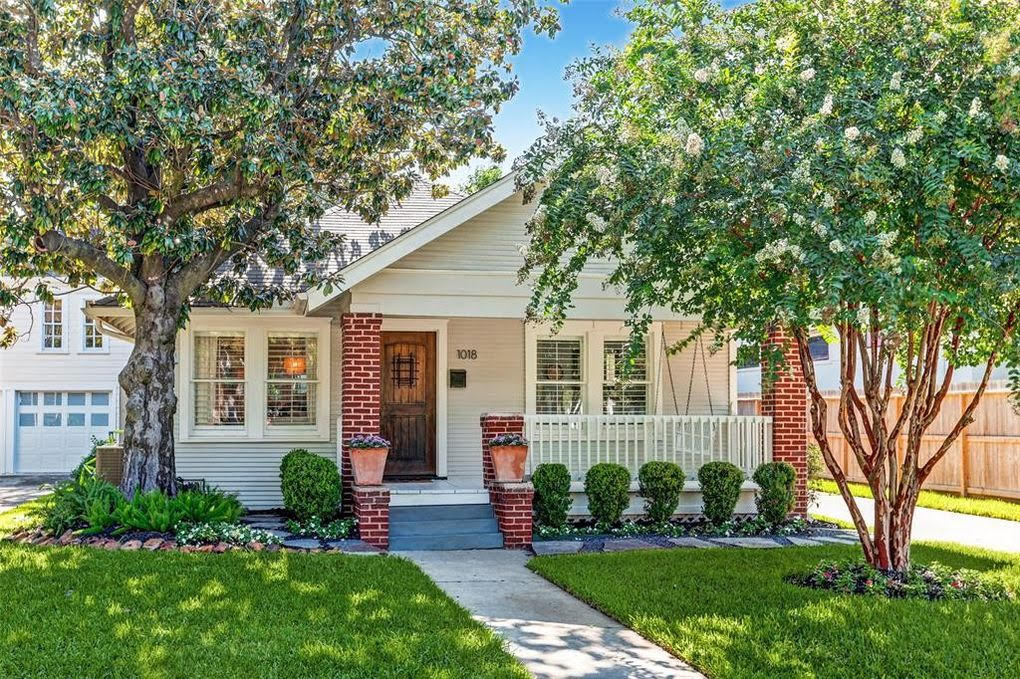
The front of the house looks dramatically better after just a few simple changes, supplying a first impression that buyers won’t forget.

“Curb appeal sells homes,” says real estate broker Bruno Fernandez, of Imagine Reality. “By simply upgrading the landscape, adding a luxurious accent door, and a fresh coat of paint that allows the original brick to pop, this home went from ordinary to eye-catching.”

Interior designer Lanna Ali-Hassan, co-owner of Beyond the Box Interiors, explains further. “The exterior of your home will either make or break whether a potential home buyer even steps foot through the front door,” she says. “The aesthetic of your home’s exterior should tell the story of what is occurring inside—and it’s your goal to get potential buyers to the next chapter.”

Ali-Hassan says that’s exactly what they’ve done here, by making the exterior of the home look clean, bright, and welcoming.

Living room
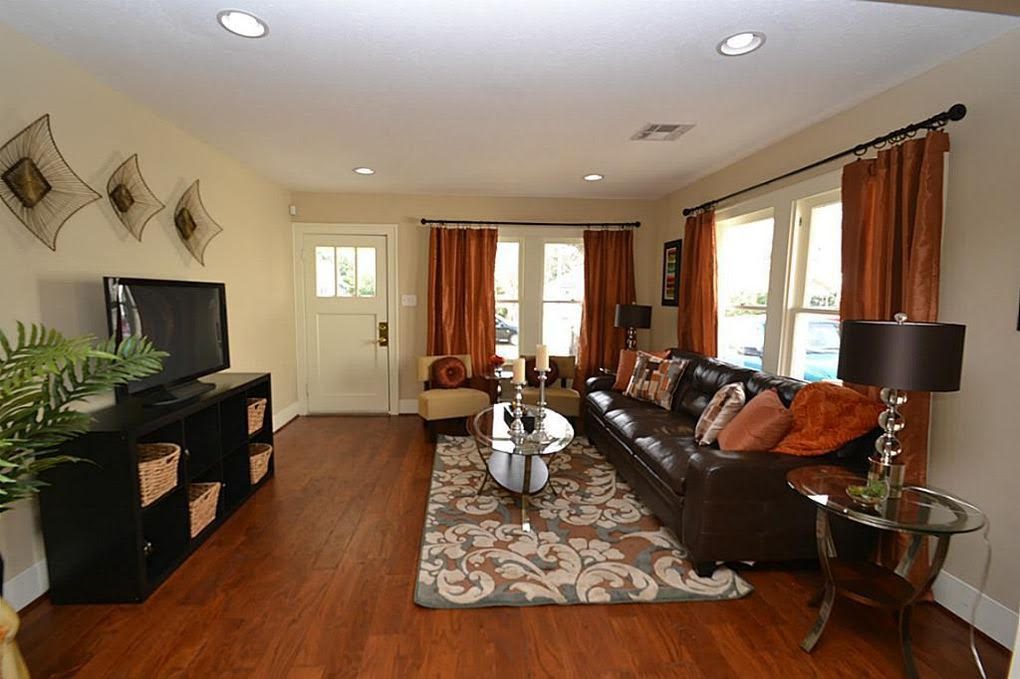
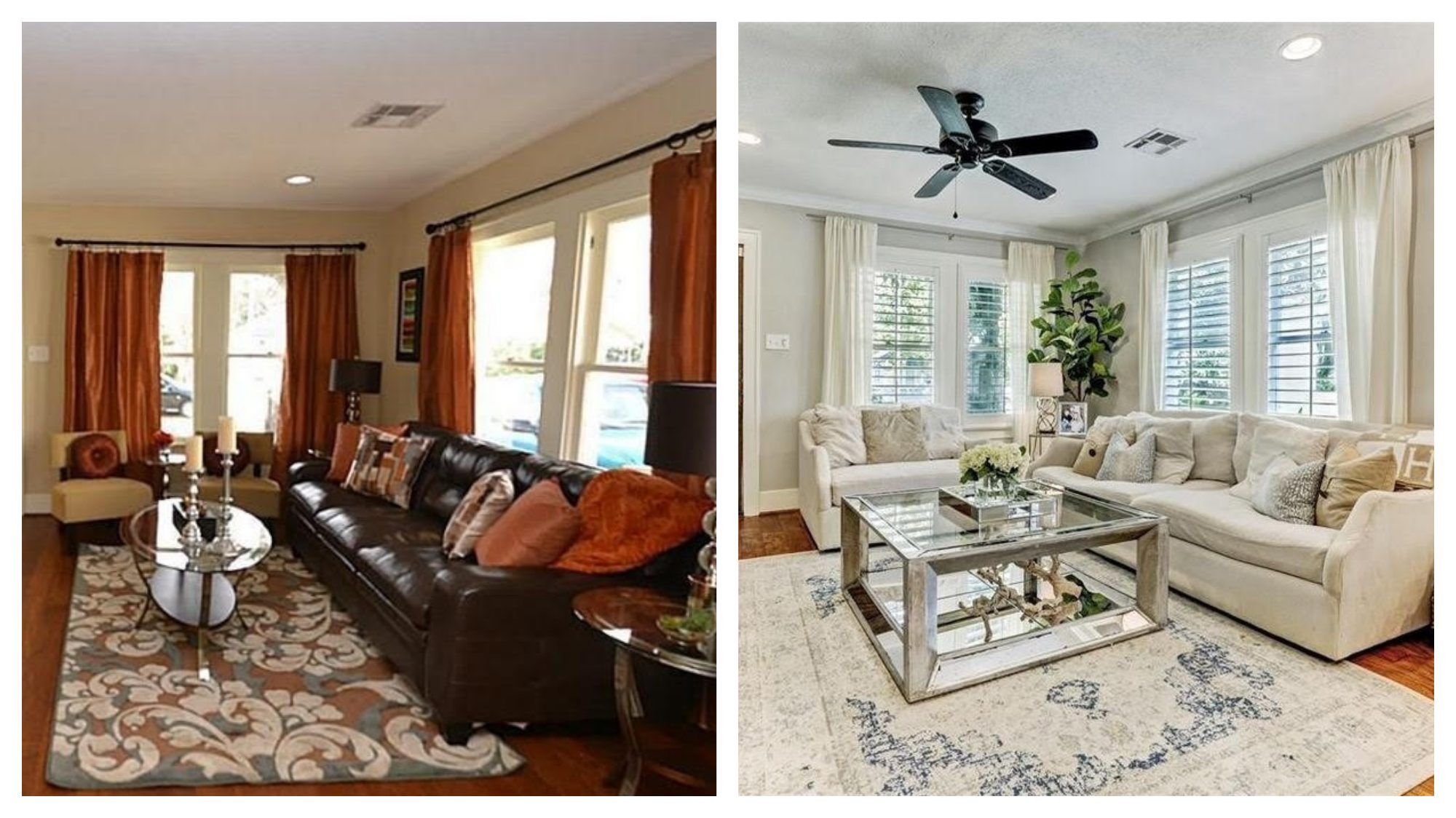
There was nothing exactly wrong with the living room before, other than the fact that it felt a little cramped. But that’s a major negative for buyers and can drive them away.

“If your living room is on the smaller side, the goal is to make it appear larger by tricking the eye,” says Ali-Hassan. That was easily accomplished in this space by using a few basic tricks, such as “incorporating lighter-colored furniture and neutral bright walls, accentuating the vertical by placing your window treatments up higher, and installing either a decorative light or ceiling fan.”

“The change is night and day,” adds New York City real estate agent Judy Liebman. “Dark furniture, drapes, floors, and accessories are replaced with more modern and light pieces.  The addition of blinds allows light in but still provides privacy.”

Kitchen
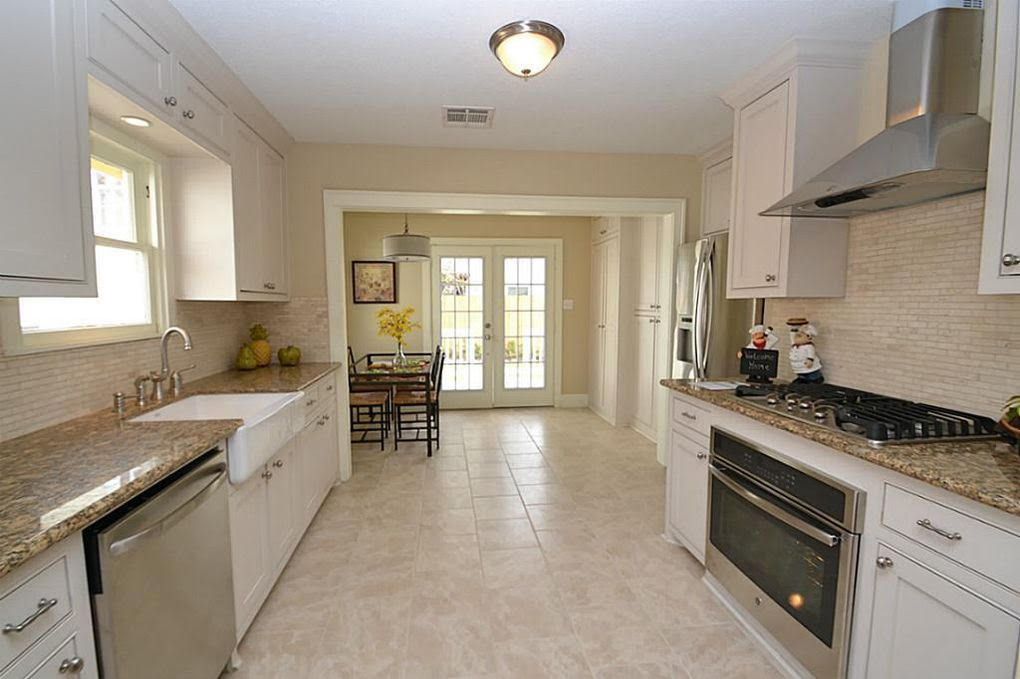
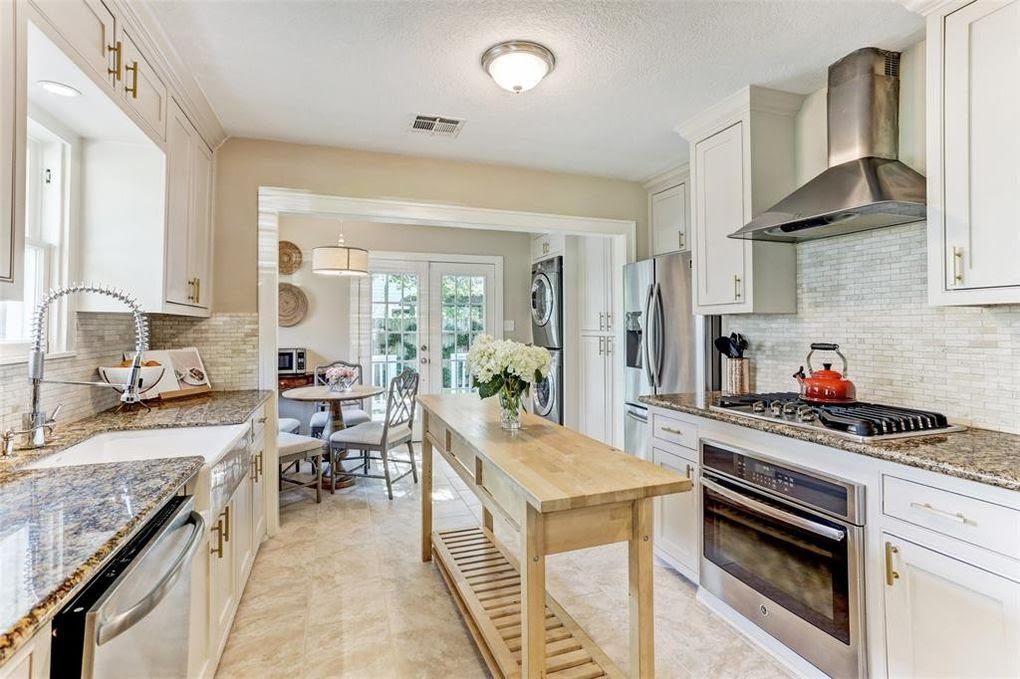
Talk about tiny changes! This is virtually the same space, but it looks like it got a major upgrade.

“It is amazing how a small change like a center island can give an old kitchen new life,” says Brad Pauly, broker and owner of Pauly Presely Realty.

While the island—which is nothing but a simple piece of movable furniture—may be the biggest change, it’s not the only one.

Fernandez picked up on a few other subtle differences that make a huge impact.

“On-trend cabinet handles, a fancy new faucet, and some strategic staging (including the mandatory cookbook and teapot) are all you need to show potential buyers that this is an upscale chef’s kitchen,” he says.

Dining room

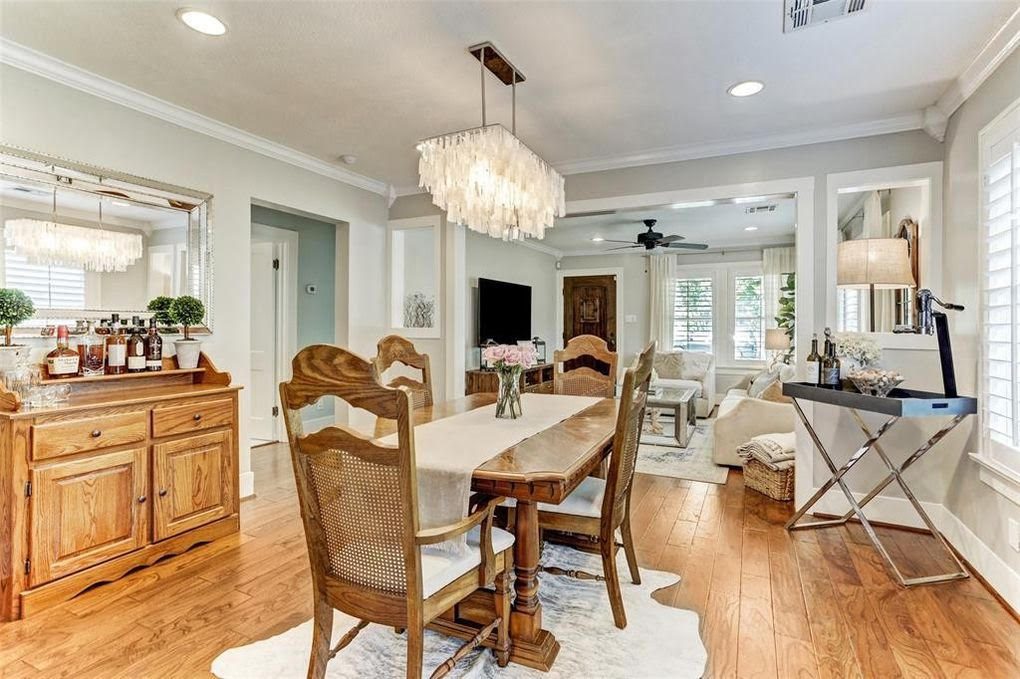
“The new chandelier, window treatments, dining set, paint, and refinished floors all help to make the space feel brighter and larger,” says Liebman. She also points out how the new decor connects the living and dining rooms, making it feel like an open floor plan.

If you’re looking to make your home feel bigger, try matching your decor to achieve this same flow.

Another positive change in this room is the scale of the new furniture. Although it may seem contradictory, the bigger furniture goes a long way toward making this room feel like a bigger space.

“Use your square footage wisely by placing furniture in a room that is the proper scale to help appropriately define and fill the space,” says Ali-Hassan.

Backyard
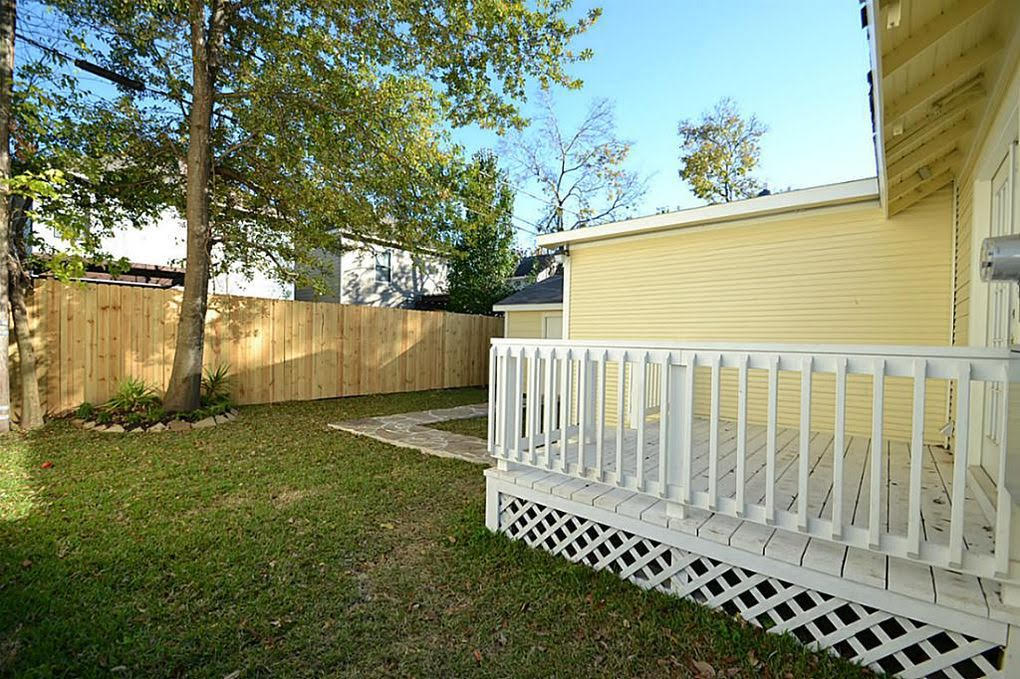
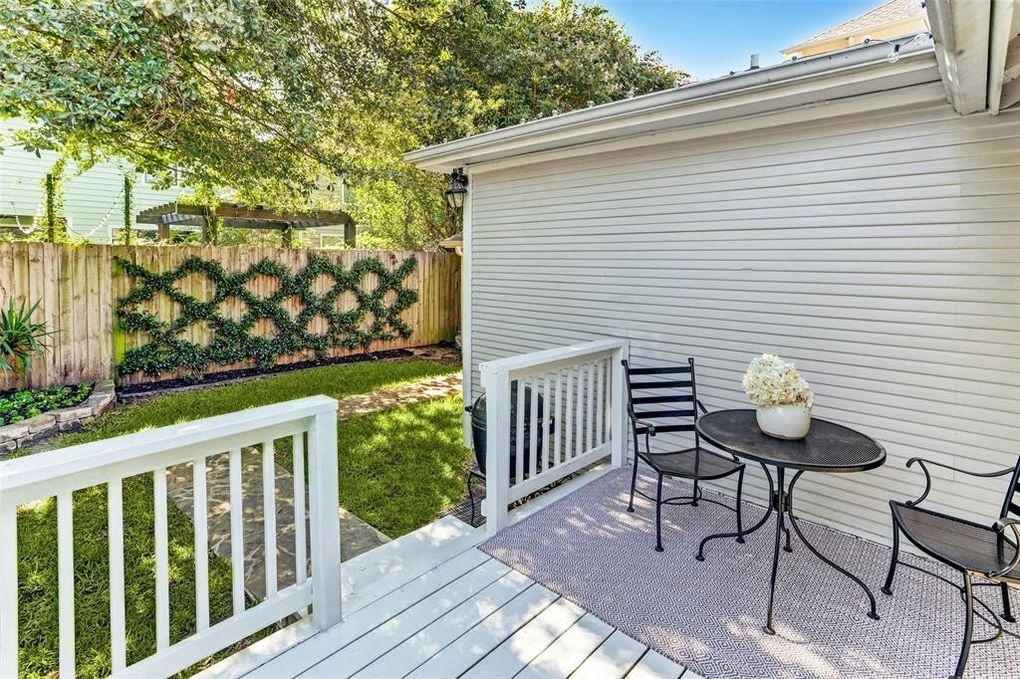
If you’re lucky enough to have a backyard, it should be decked out and made for entertaining. Before the sellers got their hands on the property, the backyard left much to be desired. But after they worked their magic, the backyard became a quaint area any buyer would love to spend time in.

“Changing the house color from outdated yellow to white is a huge improvement,” says Pauly. “Also, the addition of the patio furniture shows how the space can be used.”

“By adding both foliage and furniture, they have created two additional usable spaces: deck and yard,” says Liebman. “This adds value to the home and evokes feelings of family, fun, and entertainment. #homegoals for sure.”

The post Lessons From Listings Photos: How This House Sold in a Month During a Pandemic appeared first on Real Estate News & Insights | realtor.com®.

Thursday, September 24, 2020

The Property Brothers Reveal Those Little Extras That Mean Everything in a Home

Property Brothers

HGTV

“Property Brothers” stars Drew and Jonathan Scott know that people love homes with unexpected extras—and on the latest episode of “Brother vs. Brother,” they reveal which extras matter most.

In the episode “Super Bonus Spaces,” the Scott brothers are renovating their Los Angeles homes’ bonus areas: nonessential rooms that can be turned into a home office, guest suite, home gym, or whatever they think would make home buyers swoon.

Since Jonathan won the past two challenges, Drew is keen to come out victorious this time! So he goes all out to impress guest judge Breegan Jane of “Extreme Makeover: Home Edition.”

So what upscale extras do the brothers decide to add? Read on for some fun ideas you might be inspired to try in your own home, too.

Turn garage into a guesthouse

guest house
This Murphy bed is sleek and stylish.

HGTV

Jonathan decides to focus his energies on turning the detached garage into a bonus room/guesthouse. But since he knows that the future homeowners won’t always have guests staying overnight, he must make this space multifunctional.

To do this, he chooses a stylish Murphy bed, which will fold up into a quaint sitting area with storage. This cozy couch looks beautiful on its own, and with the bed hidden, this space is a perfect office or bonus living room.

When Jane inspects the guesthouse, she agrees that the Murphy bed is the right choice.

“These are perfect because it becomes that multifunctional space,” Jane says. “Very L.A. I’m loving this.”

Go big with the coatroom

coat room
This coatroom has so much storage!

HGTV

Jonathan knows that with his garage being turned into a guesthouse, buyers will need a space to put all the things they’d usually store in the garage.

His solution? He goes all out adding cabinets, closets, and even a workbench with tools to another bonus area in the house: the coatroom.

When Jane inspects the space, she fully approves.

“In L.A. you can never have enough storage—storage is important to buyers,” she says.

A powder room should have personality

bathroom
The wallpaper and tile in this powder room complement each other.

HGTV

Jonathan creates a bold bathroom he knows L.A. buyers will love, taking a chance with ornate wallpaper and blue tile that has an old Hollywood look.

Right away, Jane recognizes this bathroom design is something special.

“L.A. buyers are totally going to understand that this is a unique, unusual space,” she says, “and they’re going to want it.”

Make a small guest room feel larger with white paint

guest room
The kitchenette in the white guest room is gorgeous.

HGTV

While Jonathan works on his garage-turned-guesthouse, Drew is busy building his own guest suite in his house.

Usually homeowners set aside the smallest bedroom to be used as a guest room (that is, if they’re lucky enough to have a guest room at all). While this is practical, it usually means that guests are stuck in a room that feels cramped.

Drew provides a solution to this space issue by designing his guest suite to be all white. He chooses white walls, white furniture, and even a white oven in the kitchenette. The white makes the space seem bright and airy.

“Nothing in there is cramped,” Jane says. “It’s like the perfect hotel room.”

Add value with a dedicated home gym

home gym
This dedicated home gym adds huge value.

HGTV

Drew knows that he has to work hard to impress L.A. buyers, so he decides to build a small addition with lots of windows and turn this space into a home gym.

It’s an expensive addition, but he knows having a dedicated workout room will impress buyers. And since this space has only one purpose, Drew is able to add gym-specific details, like floor-to-ceiling mirrors, and workout gear.

In the end, Jane is impressed by how much Drew has been able to stuff into this small space.

“It takes knowing your L.A. customer to truly understand that we can’t live without our yoga, our spin bikes, and our reformers,” she says.

Which brother’s home is better?

Both brothers impress Jane with their bonus room renovations, but both also go over their budgets.

Jonathan plans to spend $205,000, but ends up spending $218,000, or $13,000 more than planned.

Meanwhile, Drew plans to spend a massive $375,000 on his bonus spaces, but ends up spending more after realizing he has to tear down the back of the house and rebuild it so that his addition will be stable. He spends a whopping $20,000 over budget.

Apparently the extra cash Drew blew is worth it. Once both renovations are done, Jane declares Drew the winner. Finally!

The prize? A custom-made superhero cape, which Drew dons with relish to celebrate his first “Brother vs. Brother” win this season.

Drew Scott
Drew Scott wins this challenge!

HGTV

The post The Property Brothers Reveal Those Little Extras That Mean Everything in a Home appeared first on Real Estate News & Insights | realtor.com®.

Wednesday, September 23, 2020

No Hot Water at Home? Here’s Who—or What—To Blame

cold shower

Vladimir Grigorev / EyeEm/Getty Images

No ifs, ands, or buts about it, losing hot water at home is infuriating. It often occurs without warning at the worst possible moments: when filling up the bathtub, while washing the dishes, or (arguably worst of all) when you’re in the shower with shampoo in your eyes.

But what gives? When your water switches from warm to frigid, what—or who—is to blame?

“It could be your water heater’s cry for some much-needed attention,” says Doyle James, president of Mr. Rooter Plumbing. “Before you go blaming your spouse for the cold shower, it’s important to understand that a hot water heater unable to keep up with demand is one of several major red flags pointing to the need for repair.”

No one really realizes the luxury of having hot water until it’s gone. Homeowners should know that most water heaters last only about eight to 12 years. But before you go pulling out your water heater, here are some things that could be causing problems, along with some useful troubleshooting tips.

No power or gas

Sometimes the reason for your MIA hot water is as simple as the gas supply to your water heater being shut off, either by mistake or due to a defect in the off switch.

Experts say you can check the power to your water heater by turning the gas control knob to pilot. Make sure to remove the cover where the pilot light and burner are located, at the bottom of your water heater. Look to see if there is a flame. If you find one, then your water heater does have gas and that’s not the issue.

No pilot light

If you don’t see a flame in your water heater, that means the pilot light is out. To relight the pilot light (and bring back your hot water), start by reading either the information on the tank itself or the owner’s manual. Some water heaters use a glow plug or spark ignitor, depending on the model.

To light a pilot light, make sure to turn the knob to off first and then wait several minutes for the gas to clear. Then turn the knob to pilot. For water heaters with a self-ignite feature, just hold down the button for about a minute, then turn the knob on. For flame water heaters, use a match or lighter and, while holding the knob down, light the flame at the gas supply tube. If it doesn’t light, the issue may be with your inlet valve.

Possible gas leak

Gas is used to power all types of appliances and features around your home, but your sudden lack of hot water could mean there’s a gas leak. 

Remember, gas leaks are very dangerous. Anthony Wimpey, owner of Anthony Wimpey Plumbing, says that even a tiny leak can fill a home with poisonous carbon monoxide and should be addressed immediately.

If you suspect a gas leak, Wimpey says, “report it to the gas company right away, then call a plumber to locate and remedy the situation.”

If you feel comfortable doing so, you can also close the valve on the gas line and shut off the valve control on the regulator.

Tripped circuit breaker

If you don’t have hot water at all, another possible culprit could be a tripped circuit breaker.

“Be sure to look in your electrical panel for any misaligned switches. If one of the switches is in an odd position, flip it back into alignment to reset the circuit,” says James. “If that’s not the issue, there may be a failure of the heating elements, which requires professional replacement of these components.”

Leaks around the water heater

It’s also a good idea to check if your water heater is leaking. Unchecked leaks can end up becoming a serious problem.

“Water leaking from the top of the water heater could be the result of loose pipes or valve failure. Water leaking from the bottom of the water heater is often due to condensation, a leaky gasket, or water coming out of the overflow pipe due to too much pressure in the tank,” says James.

He says the tank may also have a small rupture and be leaking between the jacket and tank itself.

“Reaching out to a licensed plumber is the only way to properly verify the source of the problem, and correct it quickly and safely so you can get back to taking hot showers,” says James.

The post No Hot Water at Home? Here’s Who—or What—To Blame appeared first on Real Estate News & Insights | realtor.com®.

Is Alison Victoria of ‘Windy City Rehab’ a Better House Flipper Alone?

Windy City Rehab

HGTV

Lately, things have been tough for “Windy City Rehab” star Alison Victoria. As if she didn’t already have enough on her plate with high-stress Chicago flips, she and business partner Donovan Eckhardt have been making headlines for their legal troubles. Now, in Season 2 of the show, viewers get to see the drama between Victoria and Eckhardt unfold.

In the episode “Bridgeport or Bust,” the two are still working together, but tensions are sky-high. Victoria decides to renovate a home in the Bridgeport neighborhood. However, Eckhardt knows that this tiny home will fetch only a small profit.

As a result, Eckhardt ends up dramatically walking away midproject, leaving Victoria to finish the renovation herself. So can she?

Read on to find out whether Victoria pulls it off, and learn some smart tactics you might be inspired to try in your own home, too.

Make a big shower seem bigger with the right tile

bathroom
This large shower is a great selling point.

HGTV

In this small home, there’s little room for mistakes. So Victoria has to make sure that she uses her budget, and the space, wisely.

One way she does this is by giving this small house a big master shower. Victoria knows that buyers love large showers, so she prioritizes shower space, borrowing from the rest of the bathroom.

shower
This shower is huge!

HGTV

Then, she makes this already large shower, with double shower heads, seem even bigger by installing chic black tile with an arrow design, which brings the eye up.

“I knew going to the ceiling with the tile was going to really make an impact,” Victoria says when the tile is installed. “It feels cathedral-like.”

The result is a gorgeous shower buyers will love—and a smart use of space.

The right colors can make a kitchen seem spacious

kitchen
Before: This kitchen’s dark cabinets made the space look small.

HGTV

This home’s living space is all about the big kitchen, so it’s important that it look great. With a custom hood and French doors leading to the family room, the space has a lot of great details. But perhaps Victoria’s best style decision is the cabinet color.

“I went with a soft green color, because it gives the kitchen a more neutral look,” Victoria says, pointing out that this light tone will feel inviting.

kitchen
After: These soft-green cabinets keep this kitchen looking light.

HGTV

Of course, Victoria is right on her paint color choice. The subtle green keeps the kitchen feeling bright and big while still making the space feel unique. It has the airy feel of a white kitchen, but with more personality.

Focus on the yard to make a small home feel larger

golf course
This backyard golf course is a fun bonus feature.

HGTV

Victoria knows that this home is small, but luckily, the backyard is huge. So she decides to bring attention outside by adding a mini putting green.

“It’s just something totally different, and I think different is good,” Victoria says.

The putting green is a fun, inexpensive way to pull attention to the large yard. It also gives the home extra personality. After all, it’s almost certainly the only house on the block with its own golf course!

Use the space under the stairs

storage
This added storage will help keep this small home uncluttered.

HGTV

Victoria knows that she needs to use all the space in this small home in order for the home to be fully functional. So she gets smart with the empty space under the stairs, adding pantry storage as well as a coffee bar.

This storage and dry bar already add major value, but their perfection comes from Victoria’s intentional design.

“We brought in the paint color from the fireplace and also the stain from the floor,” Victoria says.

In the end, the pantry and coffee bar look perfect in the living space. And they help this small house function a bit better.

A stained-glass detail will add classic charm

stained glass
This stained-glass window adds a classy touch to the entryway.

HGTV

While Victoria spends much of her renovation budget trying to make this house seem larger, she also wants to help it regain some of its vintage charm.

She gets the idea to create an elegant transom, which features the house number, out of stained glass.

“That transom has to be something cool,” she says when designing the stained-glass window. “I want something new that looks old.”

Once installed, the transom looks beautiful. Victoria loves it, saying that it “looks like it’s been there forever.”

How does this ‘Windy City Rehab’ end up?

While renovating a small home should be a straightforward endeavor for Victoria, this project is fraught with drama—and ends up costing much more than Victoria imagined.

Victoria had bought the property for $260,000, and while she had expected to spend $400,000 on renovations, it ends up costing $515,000 to get this house finished. She ends up selling it for $790,000, which means she’s left with just $15,000.

It’s a small profit, but Victoria proves that she’s able to finish this renovation on her own.

The post Is Alison Victoria of ‘Windy City Rehab’ a Better House Flipper Alone? appeared first on Real Estate News & Insights | realtor.com®.

Tuesday, September 22, 2020

8 Home Habits We’ve Dropped Since Being Stuck Inside During the Pandemic

fotostorm/Getty Images

If you’re anything like us, you’ve somehow let certain household chores fall by the wayside over most of this strange year.

Sure, some stay-at-home activities (victory gardens! sourdough boules!) have ramped up while we’ve been stuck indoors through the pandemic. But some home tasks seem to have received less attention—and others have come to a halt altogether.

Of course, it makes perfect sense during these extraordinary and stressful times that your weekly routine is a little topsy-turvy.

Below, our experts share with us the household habits they’ve been neglecting. Maybe their honesty will help jog your memory and help you create a to-do list for this weekend—or at least for when the world gets back to normal.

Vacuuming and dusting

Photo by Closets by McKenry 

For a while there, we were wiping down countertops, tables, and doorknobs daily. But other cleaning has eased off a bit, according to Karen Gray-Plaisted of Design Solutions KGP.

“There’s less activity moving through the house, so vacuuming and dusting aren’t needed as much,” she says.

Then again, without visitors popping by, why bother with Pledge on the credenza?

Hitting the grocery store

Photo by The Organized Home 

Thanks to reduced indoor dining at restaurants and the fear of exposure to the virus, we are cooking at home more than ever. Trips to the store, however, have become less frequent.

Before the pandemic, some of us shopped three (or more) times a week for food, but as of late spring, that number was cut in half, according to a recent study.

Today, most homeowners buy more at once, getting groceries once a week or even every two weeks, and often using online shopping services, like Instacart or FreshDirect.

Doing the laundry

Photo by Aspen Interiors

With the kids in their pajamas all day and parents working at home and attending Zoom meetings in comfy leggings and sweats, the volume of home laundry has diminished for many folks.

“Most colleagues see you from the waist up—and a nice shirt, top, or jacket with sweatpants are common work attire now,” says Gray-Plaisted.

Ditto for ironing dress shirts and hand-washing hosiery and lingerie.

Cleaning the guest room and bath

Photo by Keeping Interiors 

The dearth of visitors means that little to no cleaning is required in your extra bedroom and guest bathroom. Homeowners lucky enough to have this overflow space can simply close the door and then (hopefully) open it again in 2021.

Prepping weekly lunches

Photo by Sutro Architects

Remember that tasty lentil salad you used to make on Sundays to pack up for a week’s worth of lunches in the office?

With the kitchen so close to our work stations, many people have opted to forgo meal prep. Instead, we’re grabbing yogurt, toast, and leftover food to sustain us throughout the day.

If you’re looking to regain some normalcy in your weekly routine, though, try meal prepping again. It’ll certainly make it easier to juggle work and kids, and, as a bonus, you know you’ll be eating a healthy, balanced meal.

Sorting through seasonal clothes

Photo by Lydia (Kazza Design) 

When the world stopped, this past spring, our closets were filled with winter items, boots, and warm jackets. But as the weather changed, who really bothered to switch them out for summer frocks and sandals?

“Many people simply moved their dressy career clothes to the back of the closet and pulled the casual stuff to the front,” says Marty Basher, an organization expert at Modular Closets.

And since charitable thrift shops have been slow to reopen and accept donations, the typical seasonal clothing purge isn’t happening quite as much—leaving homeowners to find new and creative storage methods in their already crammed closets.

The solution here is to take an afternoon to reorganize your closet, bringing to the forefront the items you find yourself using more in 2020.

Maintaining the car

Photo by Closet Organizing Systems 

Not driving to the office and grocery shopping less means that your car is probably parked in the driveway much more than it usually is—and that’s not ideal.

According to the experts, cars that sit in park for too long can lose their battery charge, develop flat spots on tires, and even attract rodents or other pests

Try to get to a service station this fall, and be sure to have your belts, fluids, wipers, and other important gear checked out. And kick out the vermin.

Changing accessories

Photo by Coveted Home 

There was a time when homeowners would freshen up their decor with lighter, brighter accent pillows and accessories for spring and summer, and then reverse the process in the fall, with plaids and chunky knit throws.

If you’ve been living with the same look in your living room for seven months now, you’re not alone.

Since fall is officially here, and the weather is getting crisp, spend some time this weekend swapping out your colorful throw pillows for some cozy blankets. Might we suggest going all-in on Halloween or Christmas decor this year?

The post 8 Home Habits We’ve Dropped Since Being Stuck Inside During the Pandemic appeared first on Real Estate News & Insights | realtor.com®.

Monday, September 21, 2020

5 Mistakes To Avoid With Your Quarantine Garden Before the First Fall Frost

Small red tomatos on the withered plant in the vegetable garden

FYMStudio/iStock

A lot of us started new hobbies this year, and if yours involved planting the ultimate summer garden, you may just be wondering what to do with it now that fall is here. But don’t throw in the trowel just yet. While your summer schedule may have been packed with all things gardening, fall has its share of gardening delights, too—as well as tasks you’ll need to do to get that garden ready for spring.

Here are five common mistakes to avoid if you want to keep your new garden going strong.

Mistake No. 1: Not planting after Labor Day

Cold-season vegetables like broccoli and kale should be planted in fall.

zlikovec/iStock

Just because the summer flowers are fading doesn’t mean you can’t enjoy a few more blooms before winter arrives. In fact, there are quite a few flowers (and even vegetables) that are known to thrive during the fall season.

Susan Brandt, president and founder of Blooming Secrets, shares a few of her fall favorites. For instance, aster is a daisylike flower that blooms in late summer through fall, when other summer flowers are fading, she says. Calendula, also known as pot marigold, can have bright orange or yellow flowers, which also have culinary and medicinal uses.

“The petals are edible and can even be used in salads,” she says.

In addition, Brandt lists marigolds, pansies, garlic, kale, and even radishes as top contenders for fall.

And don’t worry if these seeds aren’t planted yet—there’s still time.

“Gardeners can plant fast-growing vegetables for harvest before frost,” says Jenny Vazquez of Fairchild Tropical Botanic Garden. “Radishes, broccoli, turnips, and green beans are some great vegetables that will produce all the way up to the first frost.”

Mistake No. 2: Forgetting to water

The temperatures might be steadily dropping, but if your plants are still alive, then they still need water. Forgetting to water plants in the fall is a top mistake for new gardeners, but if you want to keep your garden healthy (and coming back next year), you’ll want to stick with your watering schedule right up until the first frost.

“Carefully watch the calendar and weather forecast for your area,” advises Richard Reina of TOOLSiD.com. “Continue watering trees and shrubs until the ground freezes. Although they may seem like they’re dormant, they’re still alive.”

Mistake No. 3: Not harvesting your garden

Harvest late-summer herbs and hang them to dry.
Harvest late-summer herbs, and hang them to dry.

ValentynVolkov/iStock

All those herbs and veggies you’ve worked so hard to grow aren’t going to pick themselves. Before your first frost arrives, be sure to check your garden and harvest any last herbs and veggies, or any seeds you’d like to save. Herbs should be hung inside to dry, and seeds can be planted next season.

Harvesting isn’t just about reaping the rewards of your garden, either. It’s also about cleaning it up and getting it ready for the dormant winter season.

“Now’s the time to harvest what’s left of your vegetables,” says Brandt. “If you live in an area where you can’t grow vegetables year-round, then you should start cleaning up. Remove any rotting fruit, diseased foliage, or dead vines—this will prevent insects and diseases. If you use cages or stakes, make sure you clean them off and put them away.”

Follow these guidelines, and Brandt says you’ll be in a much better position when spring rolls around.

Mistake No. 4: Not preparing for winter

Although it might not feel like it, colder weather is most certainly coming. And if you want to give your garden the best chance of surviving the months ahead, you’ll want to be sure to properly prep and insulate it.

“When preparing your garden for fall, you need to make sure you’re aware of the temperature drops, even outside of hard freezes,” says Dan Bailey, president of WikiLawn.

“Trim back shrubs and trees, clear out weeds and any dead offshoots from your plants, and fill your garden with new mulch,” says Bailey. “This will help insulate existing plants, keep weeds from growing and, depending on the mulch, may even help with the continued health of plants.”

Mistake No. 5: Forgetting to plan for spring

For spring tulips, you'll need to plant bulbs in fall.
For spring tulips, you’ll need to plant bulbs in fall.

OlgaPonomarenko/Getty Images

If you enjoy spring blooms as much as we do, then you’ll want to start planning ahead for them—now. Believe it or not, fall is actually the season for planting your spring bulbs like tulips, hyacinth, and daffodils.

“Gardeners should make sure to plant perennials for the next season before the first fall frost,” says Vazquez. That means garden eye candy like tulips, daffodils, and irises.

To get the most out of your garden come springtime, be sure to do a little planning now—and get your garden ready, and bulbs in the ground, before it’s too late.

The post 5 Mistakes To Avoid With Your Quarantine Garden Before the First Fall Frost appeared first on Real Estate News & Insights | realtor.com®.

Jasmine Roth Reveals the One Thing a Home With Kids Really Needs

Jasmine Roth

HGTV

HGTV star Jasmine Roth and her husband, Brett, welcomed their first child, Hazel, in April. Roth deeply understands how a baby’s arrival requires some changes around the home—so it seems fitting that this topic is front and center in the latest episode of her new show, “Help! I Wrecked My House.”

In the episode “Four Weeks Until Baby,” Roth helps homeowners Jess and Rich fix up their Huntington Beach, CA, home in preparation for their first child, due in one month. True to the show’s premise, these parents-to-be had hoped to do the work themselves, but after a few muddled attempts, they decided they were in over their heads.

View this post on Instagram

POSTPARTUM UPDATE πŸ™ˆπŸ™ˆ — Yup – this is what 14 days postpartum (that’s after having a baby for all you non-baby people😘) looks like! Honestly, before getting preggo I just assumed you had the baby and then your body “bounced” back – NOPE! 🀦🏼‍♀️ — That said, we are happy and healthy (yesterday Hazel started SMILING! πŸ₯°) and every day I’m a bit more mobile. Breastfeeding (I’ve been pumping which SUCKS but I’m gonna stick it out as long as possible. πŸ‘πŸΌ) means I’ve been eating healthy and drinking lots of water, which is good and has helped. Gonna start walking the neighborhoods (😷) with @brettrothofficial, who’s super patient and doesn’t mind walking slow… — πŸ€” How long did it take you (or your partner) to recover after baby? I’ve heard “10 months in, 10 months out”…thoughts? — #postpartumbody #hazelroth #rothfamilystory

A post shared by Jasmine Roth HGTV (@jasminerothofficial) on

Roth is determined to help—but has only a $70,000 budget to fix up the nursery and completely redo their cramped kitchen and dining space.

So what does a home with a new baby really need? Find out as Roth renovates this house, and get some smart ideas for your own home, whether there’s a baby on board or not.

Give yourself a ‘feature closet’

When Roth first tours the house, the nursery is just a plain white room filled, haphazardly, with baby things. Luckily, Roth has some ideas to add both order and personality to this space.

One idea is to make the closet stand out by adding wallpaper.

“If I can put a little bit of pattern in there,” Roth says, “maybe some color, I think it’s going to make it stand out.”

nursery
The wallpaper in that closet really brings personality to the room.

HGTV

This blue wallpaper really pops in the room and serves as a fun feature. When Jess and Rich finally see the nursery, they love the room and the closet.

“It’s beautiful,” Jess says.

Save space with recessed shelves

cabinet
Recessed cabinets save valuable space in this small kitchen.

HGTV

The arrival of kids requires not just a nursery, but also a whole lot of other changes around the house. So what’s at the top of that priority list? A lot more storage!

“Babies come with a lot of gear,” Roth says, “so I wanted to make sure that we thought about that.”

When Roth first sees Jess and Rich’s kitchen, she’s surprised to see how little storage there is. So she decides to add some to a wall.

While she could have simply added traditional cabinets to this wall, she decides to instead deconstruct the wall and build some niche shelves between the studs.

These recessed cabinets give the kitchen a pantry, broom closet, and some shelves to display small appliances. And the best part is that they provide all this room without taking up the valuable space that bulky cabinetry would require.

Get creative with island cabinets

cabinet
This kind of storage is a dream come true for new parents.

HGTV

In addition to recessed shelves, Roth adds storage to the new kitchen island. Many islands have cabinets, but Roth creates something different here: a secret cabinet on the end of the island.

When the island is finished, Roth opens the cabinet door for Jess and Rich, revealing perfect storage for rows of bottles.

Of course, these parents-to-be love this feature.

“I didn’t know storage could make me so happy,” Jess says.

A kitchen island deserves some color

island
With white perimeter cabinets and white quartz counters, this light blue island looks beautiful.

HGTV

This kitchen island may have great storage, but Roth knows it also has to look great.

She knows that Rich and Jess want their living space to feel beachy and coastal, so she sets out to pick a light ocean-blue paint color. However, Roth explains how picking the right light blue can be tricky.

“I don’t want the cabinets on the island to feel like they should belong in a nursery,” Roth says.

Finally, Roth settles on a color that’s blue, but not too blue. The hue has some complexity to it and, on the island, ends up looking beachy, fresh, and still very grown-up.

Built-in banquettes offer seating and more storage

built-in banquette
This built-in banquette has tons of storage.

HGTV

Roth decides to upgrade Jess and Rich’s dining space by installing a built-in banquette. This banquette gives the dining room a comfortable vibe while still making the space look elegant.

The banquette looks great, but Roth knows that it has to include some storage solutions as well. She installs floating shelves to the wall, so Jess and Rich can display their best mementos, then she adds a secret cubby in the wall. More secret spaces!

built-in banquette
Secret cabinets are way more fun than regular cabinets.

HGTV

In the end, Rich and Jess love the storage, particularly the concealed cabinet.

“Hidden storage is cooler than just regular storage,” Rich says.

Stain wood to make it look more expensive

cabinets
These wood shelves are maple, so they save money while looking great.

HGTV

After focusing so much attention on creating storage in the kitchen and dining room, Roth knows she still has to make sure these spaces look amazing.

So, she decides to incorporate some stylish wood accents into both the niche cabinets in the kitchen and the banquette shelves in the dining room, tying the two rooms together.

To save money on these wood features, she uses maple with a walnut stain instead of oak. This less expensive wood keeps her on budget and looks great.

“Honestly, you can’t tell the difference,” Roth says of the maple. “It looks really rich and really beautiful.”

Does Jasmine Roth help fix up this house?

Roth has a long list of things to do for this renovation, and runs into a few problems along the way when she finds both structural and plumbing problems in the house. At one point in the renovation, it looks like Roth’s going to go way over budget—but she’s able to get creative and save money in other areas. In the end, she spends $71,900 on the renovation, just $1,900 more than planned.

When Roth finally invites Jess and Rich back into their house, they’re thrilled. Jess cries tears of joy when she sees her incredible new nursery, and Rich is amazed by the living space.

“You have no idea how much this has meant to us,” Rich says.

The post Jasmine Roth Reveals the One Thing a Home With Kids Really Needs appeared first on Real Estate News & Insights | realtor.com®.