Wednesday, October 7, 2020

DIY for Newbies: 7 Bedroom Projects Anyone Can Master Like a Pro

KatarzynaBialasiewicz/Getty Images

When it comes to home improvement, the bedroom is easy to ignore. We often spend more time in the kitchen (or even the bathroom) than the bedroom, and guests are more likely to hang out in the living room than the sleeping quarters—which makes it tempting to treat the bedroom like a storage space instead of a refuge for relaxation.

But these days, we need a fantastic bedroom more than ever.

“The bedroom is meant to be a retreat, haven, and a space in which one can decompress, relax, and ultimately drift off into a blissful, deep, REM-filled sleep,” says Christopher Totaro, a Realtor at Warburg Realty and a professional contractor.

If sweet dreams are your objective, keep reading to discover easy projects that any homeowner can tackle to take the boudoir from bleak to blissful.

1. Upgrade your bed with a DIY headboard
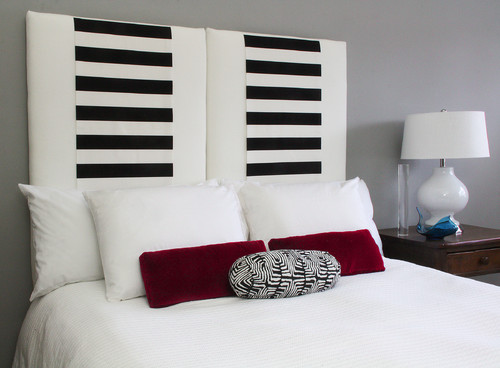
A new headboard is an easy and impactful way to make a statement in your bedroom—and the bigger, the better.

“Nothing says elegant like an oversized headboard that doubles as an art piece,” Totaro says.

To make your own headboard, start by determining the size you want, then head to the hardware store and ask for a piece of plywood to be cut to size and delivered.

To finish your project, you’ll need some fabric, upholstery foam, and a heavy-duty stapler.

A new headboard is a great project for beginners, because anyone can learn the steps from watching YouTube tutorials or finding instructions online, Totaro says.

“The key for beginners to have successful results is to do the research and make a detailed, step-by-step plan,” he says.

2. Streamline clutter

Does decluttering count as renovation? Maybe, maybe not. But a messy bedroom makes it nearly impossible to unwind at the end of a long day.

“If your room is filled with clutter, you will constantly be thinking about addressing the clutter,” Totaro says.

If you don’t have the budget for a professional organizer, don’t worry.

“You can certainly address clutter yourself with a bit of ingenuity, a tape measure, a Container Store, and some elbow grease,” Totaro says.

Once you’ve finished sorting through your belongings and deciding what stays and what goes, stock up on vacuum bags in different sizes to efficiently pack up your offseason clothing and other items.

3. Add more storage

No walk-in closet? No problem. There are plenty of ways you can increase your bedroom’s storage, even in a small space.

“If you want to improve the space efficiency in a bedroom, consider custom closet design or other built-ins, like a headboard nook or Murphy bed,” says David Crompton, head of construction at Pro.com.

If you’re comfortable with some assembly and using basic power tools, Totaro suggests heading to Ikea to pick up floating cabinets or wardrobe cabinets for your bedroom.

4. Change out light fixtures

Installing a skylight is one way to brighten up a bedroom, but for many homeowners, that kind of project is daunting.

Luckily, there are easier ways to add light to the bedroom.

“Installing new light fixtures or adding new paint in a cooler hue can make the room feel larger,” Crompton says.

When you swap out fixtures and lightbulbs, be mindful of which bulbs throw the best light for optimal mood lighting in your bedroom.

5. Freshen up the paint and decor

We’ve said it before: Putting up a fresh coat of paint is a beginner-friendly job that doesn’t require any special skills.

“Since any paint job can be redone, it is a great project for someone who is not sure they can be good at home projects,” says Docia M. Boylen, owner of Handyman Connection of Golden.

If painting the whole room is intimidating, start with an accent wall—the wall behind the bed is a good option.

“In order to pick the right color, search for ‘color wheel’ on the internet and find a complementary color to what you have on your walls now,” Boylen says.

Once you’ve decided on a color, make sure to protect your floors and furniture from drips with plastic sheets before you start painting.

6. Mount mirrors and swap out accessories
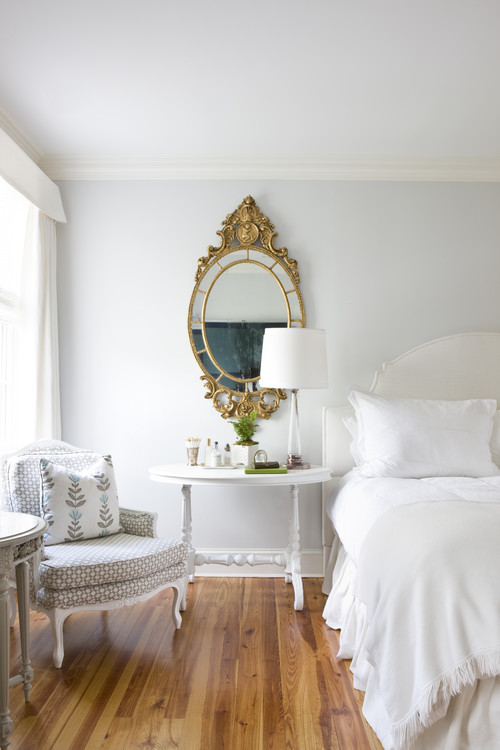
For an even easier project, make strategic choices with decor and accessories to give your space a new look and feel.

“Adding mirrors and other reflective objects can tend to make a space seem larger,” Boylen says. “Look for reflective objects like picture frames, closet doors, or even pillows.”

And don’t forget the bed—the most important element of any bedroom. Aside from switching up the appearance with a new duvet cover or throw pillows, try incorporating different accessories to add personality to your bedroom.

“If you have a comfy blanket in another room, bring it into the room and experiment with it on the bed, covering a pillow or hung over the foot of the bed or even the headboard,” Boylen says.

7. Reimagine your bedroom altogether

Who says a closet has to be a closet? It’s your bedroom, your rules. Challenge yourself to find creative ways to make the most of a quirky space.

“Do you have an older home with really small closets? Change up the space by making one small closet into a coffee area,” Boylen says.

Take off the closet door and rearrange the shelves to create a coffee nook, or whatever else your heart desires.

“You may need to work with an electrician to get some power in there, but you can start with an extension cord,” Boylen says.

The post DIY for Newbies: 7 Bedroom Projects Anyone Can Master Like a Pro appeared first on Real Estate News & Insights | realtor.com®.

How the Pandemic Helped Me Rediscover My Favorite Part of Our House

Front porch

Fogstock / Eric Palmer / Getty Images

My home’s front porch was the feature that made me yell, “Stop the car!” when my husband and I were house hunting some 20 years ago.

Having grown up in a relatively charmless 1955 split-level, I viewed a front porch as a delightful throwback to days when neighbors knew one another by name—a time when life was a bit slower, simpler. When I spotted this porch on this house, it was love at first sight.

After putting in an offer, I envisioned myself sitting out on that porch, watching the seasons change from the comfort of a rocking chair. I imagined rising early on weekends, reading the newspaper on that chair, coffee in hand, waving to dog walkers.

Small but mighty, this porch has really come through.

Liz Alterman

But, sadly, in the two decades we’ve lived in this home, rarely have I spent more than 10 consecutive minutes relaxing on my porch.

Invariably, as soon as I’d sit down, the phone would ring, one of my children would need a ride to practice, or another interruption would curtail the peaceful interlude I’d hoped to have.

And so our porch sat there, unused for decades.

And then the coronavirus pandemic hit.

How the pandemic made my porch more important than ever

Once COVID-19 compelled us to hunker down at home, our day to day ground to a frightening halt. Suddenly, my family of five was home together all the time, indefinitely.

As weeks dragged into months, we sought out less-inhabited areas of our home, desperate for a bit of solitude. Searching for a new, quiet space led me back to my front porch.

Unfortunately, over the years, I’d neglected the very thing that made me fall in love with our home. Leaves, old newspapers, and sporting equipment were piled in the corners. Spiders were making more use of this area than we were. Luckily, no big fixes were required, and after a good sweeping, power washing, and window cleaning, the space looked better than it had in years.

While I would’ve loved to have done some serious online shopping to transform my porch into a Pinterest-worthy oasis, the economic downturn made me cost-conscious, and I decided to hunt around my backyard to make do with what I already owned.

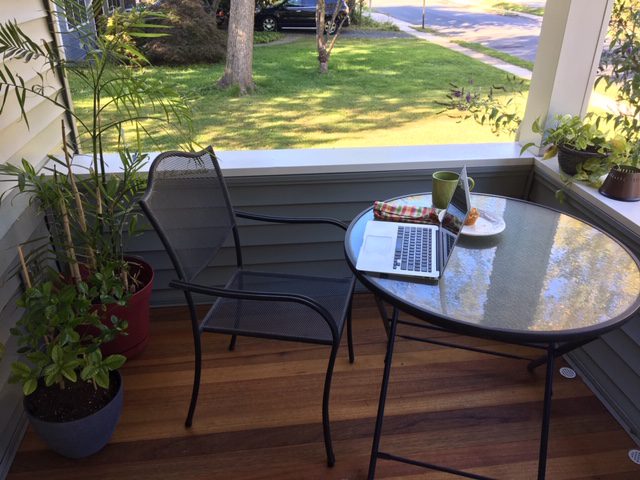
I moved a small table onto the porch and began working out there. Aside from a few curious birds and squirrels, it was delightfully quiet compared with inside our home.

My new outdoor office

Liz Alterman

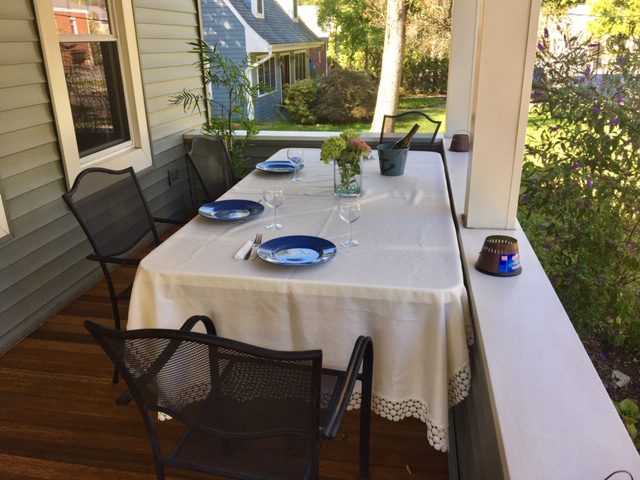
As summer rolled around, we were eager to reconnect with our neighbors. Because indoor dining wasn’t an option and most of us weren’t comfortable venturing into one another’s homes yet, we set up a larger table on the porch and put a fan in the window to keep air circulating.

I joked with our guests, “Pretend you’ve been seated in the porch section of a restaurant—just don’t expect great service.”

Embracing the outdoor dining movement

Liz Alterman

This space was so pleasant compared with my mosquito-filled backyard, I began inviting friends there to join me for drinks. Even as a thunderstorm blew through town, we were able to sit out there sheltered and dry. It made me wonder: How had I not been doing this for years?

Before long, even my kids recognized the charm of our porch.

My son enjoying fresh air and a private reading nook

Liz Alterman

Adding some comfortable furniture and other touches has made porch time more pleasant as well.

As Emilie Baltorinic, an interior designer at Living Space, points out, “It’s the first thing you see when you get home, and the last thing you see when you leave, which means it should put a smile on your face.”

With that in mind, I added plants for a burst of color.

Seasonal plantings provide a warm welcome.

Liz Alterman

By rotating furniture to fit my needs, I’m making the most of the porch, and it seem as if I’ve added a whole new room to my house. Hoping to make the most of this space even as the weather cools, I turned to designers for their advice on how to decorate my front porch so it’s as comfy as can be. Here’s their advice.

Bring interior comforts outside

Add a focal point to your porch with a rug.

amazon.com

Kriss Swint of Royal Building Products recommends covering up that cold floor with an outdoor rug (Amazon.com, $31.99).

“Layer rugs for a cozy look and added texture,” says Swint. “Consider using a patterned outdoor rug on top of a durable jute rug. The top layer will add a pop of color to your exterior, and the natural fibers of the jute rug help to add texture. Select rugs that are made for outdoor use for easy cleaning.”

Baltorinic suggests adding extra pillows and a heavy blanket to enjoy this space even when there’s a chill in the air.

Hang porch curtains

Waterproof and fade-resistant, these curtains are easy to hang and remove.

amazon.com

Want to add privacy and keep the chill at bay? Drape outdoor curtains (Amazon.com, $34.99), Swint says.

“Keep cold winds out and lock heat in by hanging outdoor curtains,” says Swint. “They also create intimacy and privacy to your space. Choose outdoor fabric or use waterproofing spray on fabrics like cotton or burlap.”

Light it up

Hang these lanterns or set them on the table.

amazon.com

The first sign of winter is it gets dark before dinnertime, notes Julia Turner, design director at Rings End.

“To encourage you to use your outdoor space after nightfall, invest in more than the standard porch light,” says Turner. Use string lights, solar lights (Amazon.com, $23.99), or even candles to light up outdoor space.

“There might be enough sun to power a string of lights draped along an eave or criss-cross through a container arrangement,” Turner adds. “You can also choose path lights available in different styles for bringing light to an entryway.”

It’s a shame it took a pandemic for me to rediscover my porch, but now that I have, that’s where you’ll find me.

The post How the Pandemic Helped Me Rediscover My Favorite Part of Our House appeared first on Real Estate News & Insights | realtor.com®.

Tuesday, October 6, 2020

6 Must-Know Recycling Rules That’ll Keep You From Doing More Harm Than Good

recycling bin

MattGush/Getty Images

Everyone knows that recycling is good for the environment. Most do their part to make the planet more green by regularly tossing items into the blue recycling bin.

But as good as your intentions are, you may be doing more harm than good if you’re unaware of the most common recycling rules. For example, not every piece of plastic, cardboard, or aluminum belongs in the bin.

“Approximately one-third of what typically goes into recycling bins in the U.S. doesn’t belong there,” says Jeremy Walters, sustainability ambassador for Republic Services. “One of the biggest misconceptions is that an item is recyclable if it has the recycle symbol on it. This, coupled with confusion about what can and cannot be recycled, has caused contamination rates to increase.”

The types of materials that can be recycled can vary from state to state and city to city, so it’s important to be knowledgeable about the recycling best practices in your area. Be well-versed on the following rules to make sure your household is recycling the right way.

1. Know the basics

Recycling reduces the amount of waste being sent to landfills and incinerators, conserves natural resources, and saves energy. Many items can be recycled, but if they don’t get properly sorted, they’ll go straight to the trash. Make the effort to sort as you go.

As a rule of thumb, the following materials are accepted no matter where you live: paper, cardboard, metal cans, and plastic containers labeled with a No. 1 or 2.

2. Crush plastic bottles, leave caps on

Recycling is the right thing to do, but it’s also important to do it right. Plastic bottles should be emptied out and crushed with the bottle caps on when thrown into the recycling bin.

The plastic recycling industry used to not be able to recycle bottles with caps; however, as processing technology improved, the message has changed to ask that caps remain on the bottles, according to the Association of Plastic Recyclers.

3. Don’t put plastic bags in the recycling bin

Plastic is recyclable, so bags made of plastic belong in the recycling bin, right? Wrong.

“Don’t put plastic bags and plastic wrap in your curbside recycling bin,” says Nina Goodrich, executive director of GreenBlue, an environmental nonprofit. “They only cause problems for recyclers by getting tangled in the equipment.”

Instead, take your clean and dry bags, wraps, and films to a drop-off location like a retail store. Search for drop-off locations at plasticfilmrecycling.org.

4. Plastic cutlery and coffee cups are not recyclable

We’ve all been ordering a lot more take-out meals lately, so your collection of leftover plastic utensils has probably piled up.

But while plastic cutlery is convenient to use in a pinch, it’s not recyclable. Plastic knives, forks, and spoons are typically not accepted in most local recycling programs and—because of their small and narrow size—can get stuck in or fall through the machinery that sorts them.

And don’t even think about chucking your Starbucks coffee cup into the bin either! To-go cups made of cardboard have a plastic or wax lining that keeps liquid from leaking, but the lining also makes the cups nonrecyclable.

5. Break down all cardboard boxes

Each year 24 million tons of corrugated cardboard are discarded, according to the Environmental Protection Agency. Most of that cardboard, around 91%, is recycled; but the big rule for cardboard boxes is to break them down so they’re flat. That way you’ll optimize space in your recycling bin and reduce the number of pickups needed from your local recycling service.

One type of cardboard box you should just throw in the trash? Pizza boxes. The grease and food soaked up by the cardboard make pizza boxes a gross mess to recycle.

6. Keep items empty, clean, and dry

Food is not recyclable, so every item you throw in the bin should be spotless.

“One ketchup bottle or not-quite-empty milk carton can cause your entire bin of otherwise perfectly recyclable items to be contaminated,” says Walters.

Therefore, any scraps, liquid, or waste should be removed from your recyclable items before tossing them.

Goodrich suggests rinsing out any recyclables that have a thick or sticky residue, like peanut butter or frosting jars.

The post 6 Must-Know Recycling Rules That’ll Keep You From Doing More Harm Than Good appeared first on Real Estate News & Insights | realtor.com®.
Monday, October 5, 2020

Jasmine Roth Reveals How To Spend Less Renovating a House

HGTV

Jasmine Roth of “Help! I Wrecked My House” is used to finding homes in disrepair. After all, her clients have usually tried to go it alone with their renovations, and things inevitably go wrong. Still, Roth probably didn’t expect to find her latest renovation completely gutted.

Roth meets Sara and her boyfriend, Chris, in the episode “I’m Living Here?” The couple bought a house in Costa Mesa, CA, with intentions of fixing it up. However, things got a little out of hand when Chris teamed up with Sara’s dad to demo the living spaces. They ripped up the floors, tore the walls down to the studs, and demolished the kitchen. These two exerted a lot of effort, but, as Roth points out, they may have taken away too much, and perhaps damaged the structure of the house.

Roth has only $75,000 to put this house back together and cover any problems that Chris and his demo have caused. Read on to find out what cost-efficient features Roth adds to give this home a custom look without breaking the bank.

Cover fireplace brick for a quick makeover

fireplace
Many homeowners think brick fireplaces look dated.

HGTV

When Roth first sees Chris and Sara’s home, she’s shocked by how much of it is gone. From the floors to the walls, this place has hardly anything left. The one thing Chris and Sara’s dad kept was the fireplace. They like the idea of having a fireplace; they just don’t like that it’s brick.

It’s up to Roth to make over this fireplace in a way Sara and Chris will love, without spending a bundle. Luckily, she has an idea for a cheap cover-up.

fireplace
With a new look, this fireplace is stylish!

HGTV

“We can change the look of this fireplace and keep our costs down by just layering on top of it,” Roth says.

She uses white tongue-and-groove panels to cover the brick, then tops it off with a soapstone surround. This solution saves money and time, and when Sara and Chris see it, they love the change immediately.

“Look at the fireplace,” Sara says, “it’s beautiful.”

Make open shelving more functional with dowels underneath

shelves
These shelves have extra function.

HGTV

When discussing kitchen design, Sara mentions that she doesn’t like floating shelves; she thinks they aren’t very functional. However, Roth knows that there isn’t enough room to put cabinets in one particular corner of the kitchen. She assures Sara that the floating shelves will look great and tells her that she plans to make them look a little different from typical shelves.

To add a custom touch, Roth adds dowels underneath the shelves so that Sara and Chris can hang mugs.

When the kitchen is finished, Sara loves the new shelves.

“This is functional,” she declares.

Wine storage can double as art

wine holders
These DIY wine holders look great on the wall.

HGTV

Roth knows that Sara likes having wine on hand for entertaining, so Roth wants to find a stylish way to store wine bottles.

Roth goes the DIY route, using some leftover wood and square stock metals to make wine bottle holders. These shelves look great on the dining room wall.

Not only are these shelves convenient for choosing a wine during a dinner party, she notes, but they also remove the need to buy a large piece of artwork to hang by the table.

Paint is still the easiest way to transform a space

house
Chris and Sara painted the house by themselves, and it looks beautiful!

HGTV

Sara and Chris don’t have a big budget, so Roth plans to keep her renovation to the interior and the backyard. However, she shows up to the house one day to find that Chris and Sara have painted the entire house, going from mint green to white.

While Roth is used to homeowners’ DIY projects going wrong, she’s impressed by this move.

“It actually looks really good,” Roth says. “This is a good DIY. It’s paint, and it can change the look.”

This is a good example of a project that homeowners can do themselves without risking damage to the house.

Upgrade the yard with an outdoor kitchen

kitchen
This outdoor kitchen is small, but it makes the yard feel special.

HGTV

Sara and Chris have a sizable backyard, so Roth wants to make sure these two can use it often. She comes up with the idea to add a fun but inexpensive kitchen area that will help these two enjoy more time outside.

She brings Chris and Sara’s grill over, and builds a table into the side of the house.

“Technically, we could’ve just bought a table and set it here, but I love that this is, like, built-in, you know what I mean?” Roth says. “Like it’s part of the house.”

To make it fit in even more, Roth stains the legs and base of the table the same color as the wine shelves and uses the same soapstone from the fireplace surround for the countertop.

When the work is done, Roth is proud of the space.

“It was inexpensive, and now they have basically an outdoor kitchen,” she says.

Does Jasmine Roth help this house?

With a tiny budget and a house that may have sustained a lot of damage, Roth has to be extra careful at every step of this renovation. With her $75,000 renovation budget, she spends $50,000 on the new kitchen and has just $15,000 for the fireplace, dining room, and backyard.

In the end, she manages to stay on budget, and Chris and Sara are thrilled with the renovation. And it seems they have even more to celebrate—during renovation, these two got engaged! Embarking on married life with a beautiful new home is the best wedding gift.

The post Jasmine Roth Reveals How To Spend Less Renovating a House appeared first on Real Estate News & Insights | realtor.com®.
How To Wall Mount a Flat Screen TV | DIY Basics

8 Pest Control Mistakes You’re Making That Are Sure To Invite the Critters In

pest control mistakes

TheCrimsonMonkey/Getty Images

You probably don’t think—or don’t want to think—much about the creepy crawlers and rodents that could be hiding in your home.

But that doesn’t mean they aren’t there. (Cue the spooky music!)

The truth is, many of us unknowingly live alongside bugs, mice, and plenty of other uninvited guests lurking in our homes. And when it comes to pest control, ignorance is not bliss. You need to know what you’re up against in order to prevent and evict unwanted critters.

We talked with entomologists and experts to learn everything you could be doing that unwittingly invites the creepy crawlers in. Here’s what they say are the top mistakes you might be making.

1. Being reactive—instead of proactive—about pest control

If you notice an ant in the kitchen, it might not send you into full mitigation mode. Likewise, if you see one little mouse scurry across the garage, maybe you set a trap and move on with your day.

“Sometimes that works—and other times it may only be the beginning of the infestation,” says Todd Johnson, associate certified entomologist and technical services manager for Western Exterminator.

It’s far easier to prevent infestations than eliminate problems after they pop up, Johnson says. Prevention is also much cheaper than removal.

“Spraying pesticides or placing traps inside the home may only temporarily correct the concern but not permanently solve the problem,” Johnson says. “Look for any issues that are attracting insects, and remove these situations to reduce attractions for pests.”

2. Not checking the doors, window screens, and seals around your house

Even with the doors shut and windows closed, it’s easy for insects to sneak inside your home.

“Due to their exoskeleton being on the outside, they can condense themselves to a smaller size to pass through very small cracks,” says John Bell, product development and staff entomologist at TruGreen. He says homeowners often don’t understand how bugs get past closed doors and windows.

“I then have to show them that the door sweep is worn out, which is evident when you can see outside light shining through it, or that rips in the screen are enough for that ant to slip through,” Bell says.

“Making sure door sweeps are in good working order, fixing damaged screens, and sealing cracks and crevices around the structure with caulk can help prevent pests from entering,” he advises.

3. Letting your landscaping overgrow

The outside of your house can be a comfy sanctuary for pests without your realizing it.

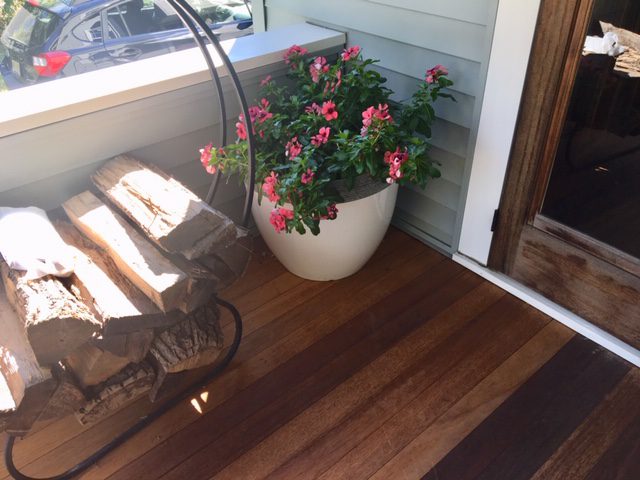
If you have overgrown landscaping like bushes or shrubs that make contact with the house, you’re unwittingly creating tons of potential hiding spots for critters. Firewood leaning against the house or garage and overgrown grassy areas are also popular havens for pests.

“Moving firewood away from the home and keeping grass mowed will make it less desirable for insects and rodents,” Johnson says.

4. Leaving out temptations for critters

If you leave the lid off your trash can or let the dog abandon a treat on your patio, you may as well send a personalized invitation to all the pests in your neighborhood.

“Critters are opportunistic,” says Ray Hess, region technical training manager at Arrow Exterminators. “If food and things to live in are left out for them, they will take full advantage of it.”

So take away the temptations: Dispose of trash in a timely manner, and don’t leave any food sitting out (whether you’re indoors or outdoors) that could appeal to pests.

5. Allowing water to pool around your yard

“The more stagnant water around your home, the greater the potential for mosquitoes,” explains Bell. “As a rule of thumb, the earlier in the season and the greater the precipitation, the larger the potential for insect populations.”

If water frequently pools in your yard or near your house after a heavy storm, you may want to work with a landscaper to improve your drainage system.

6. Using the wrong pesticides

If you reach for the wrong pesticide, you could make your pest predicament even worse—especially if you’re dealing with ants.

“If you apply the wrong pesticide without doing research first, it can cause the ant colony to bud or ‘split’ and spread throughout the home,” Johnson says.

Do your homework before you start spraying pesticide, or reach out to a licensed pest management company to handle the pesticide application for you.

7. Not timing your efforts with the season

Sure, spring is a big season for bugs: As temperatures rise, insects become more active and reproduce, Bell explains. By summer, insects are living their best lives and thriving outside.

Then as temperatures drop, some pest populations begin to die off.

But others head inside—and into your house—to seek warmth.

“They are living creatures just like us, and they want to be warm and safe, too,” Hess says.

If you aren’t eager to play fall and winter host to a crew of rodents or a slew of spiders, double up on your efforts to close up the openings to your house. Alternatively, you can call in a professional pest control company to survey your home and close up gaps as the season changes from warm to cold.

8. Not knowing the pests unique to your area

No matter where you live in the nation, every region deals with mosquitoes, ants, and mice, Johnson says. Beyond that, pests vary from region to region.

“The South will deal more with black widow spiders and fire ants compared to the carpenter ants and hobo spiders of the Northwest,” Johnson says. “Stink bugs and spotted lanternflies of the Northeast would be a different challenge than the roof rats and drywood termites of the West Coast. “

Even within a specific region, pests can vary: “There are also some ants, like the tawny crazy ant, that have not moved to areas farther north than Georgia yet because of the susceptibility to freezing temperatures,” Bell says. “They have only been a problem in the Gulf states.”

To make sure you’re prepared to deal with your local variety of critters, do your research or work with a local pest mitigation company that has expertise in your area.

The post 8 Pest Control Mistakes You’re Making That Are Sure To Invite the Critters In appeared first on Real Estate News & Insights | realtor.com®.

8 Ways to Decorate Pumpkins for Fall