Tuesday, November 5, 2019

How to Decorate Your Home With Twill, This Winter’s Hottest Textile

tolgaildun/iStock

With autumn in full swing and the first holiday ads infiltrating your screens, you might be thinking about jazzing up your home with new accessories before any (cough, cough) winter guests come to stay. One way to change things up is to try different fabrics for your decor accents or upholstery.

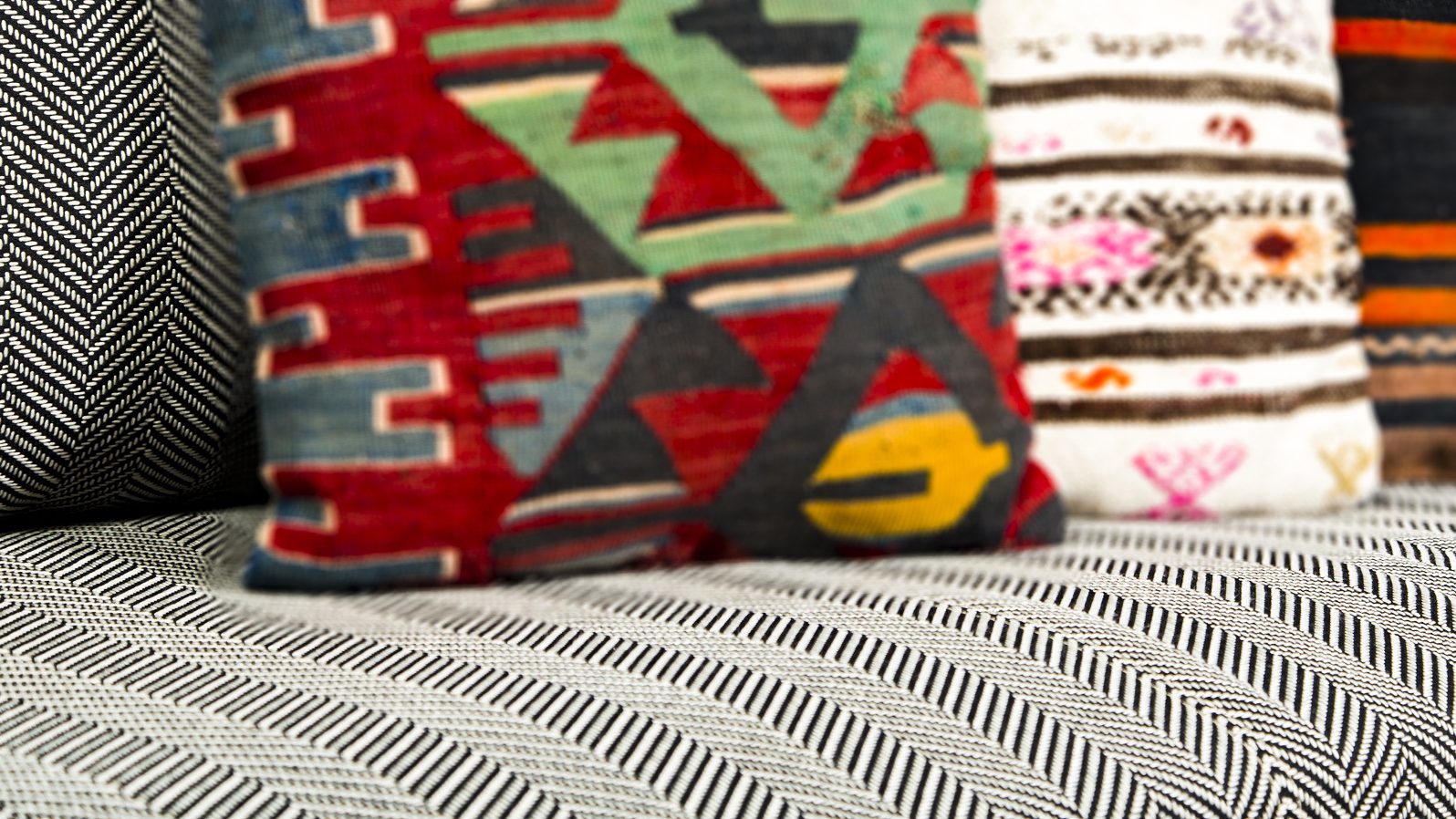
Twill is one fabric making waves—or should we say weaves?—this season for its utility and rich texture. Recognizable by the thin, diagonal lines that run across the fabric (usually all in one direction), twill is showing up everywhere—on sofas, curtains, and even wallpaper.

“Twill weaves are trending because they are simple and timeless patterns that complement all kinds of design styles, making the simplicity of the pattern a very versatile fabric to work with,” explains Wendy Gonzalez, interior designer and founder of Modern Ornament in New Jersey.

What’s more? Twill fabrics tend to last, Gonzalez points out; cotton twill is especially popular for its durability. But if you’re feeling frisky, you can find twill in other styles—even velvet.

Do you have the will for twill? Here’s how to add this easy-to-care-for fabric to your home in time to cozy things up for winter.

Twill wallpaper
Twill decor
Twill wallpaper

Ballard Designs

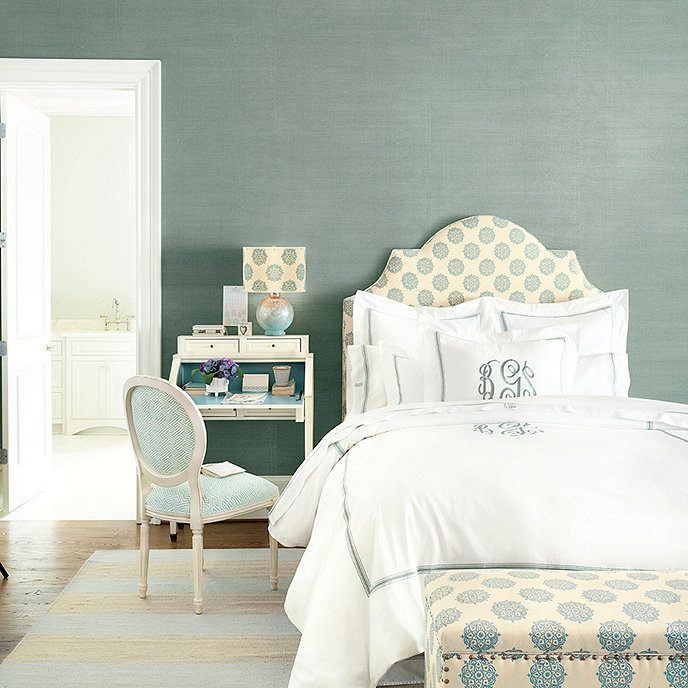
If you find paint a bit plain or just simply crave some texture in your home, twill wallpaper could be for you. Try this rich look in your hall bathroom, as an accent wall behind your bed, or in the dining room for a sophisticated touch.

What to buy:

———

Twill bedding

Twill decor
Bamboo twill sheets

Brooklyn Bedding

Move aside, heavy flannel winter sheets. Twill sheets are an upgrade you’ll want to make to all your bedding in the upcoming months. The unique weave makes them ultrasoft and warm like your favorite flannel shirt, but still lightweight and breathable to keep you comfortable at night.

What to buy:

———

Herringbone twill accents

Amazon

Gonzalez recommends looking for accessories in a herringbone twill pattern for a nice twist on the traditional weave. Opt for this pattern on accent pillows, floor cushions, and ottomans.

What to buy:

———

Twill curtains

Pottery Barn

If your drapery needs an upgrade, twill is a solid choice for a soft fabric. It’s easy to clean and won’t wrinkle easily, Gonzalez explains. Look for the material that works for you and your lifestyle, from easy-breezy cotton to a more dramatic twill velvet.

What to buy:

———

Twill sofa covers


Photo by L Marie Interior Design 
If you’re looking for upholstery fabric that can endure a never-ending slog of holiday guests, playful pets, and everyday wear and tear, twill is a smart choice, explains David Ewart, director and designer at Pavilion Broadway.

“Our favorite twill designs tend to be on sofa covers,” Ewart says. “When compared to many fabric and suede coverings, twill coverings tend to be the perfect choice for those with a young family or pets, where there is a lot of traffic and play around the house.”

What to buy:

The post How to Decorate Your Home With Twill, This Winter’s Hottest Textile appeared first on Real Estate News & Insights | realtor.com®.

Replacing Carpet With Hardwood Floor: Which Has a Better Resale Value?

iStock

Thinking about a remodel of your hard surfaces by putting in flooring made from hardwood? You’re not alone. Flooring options abound, with numerous types of hardwood on the market, plus synthetic choices that look like the real deal. And heavy foot traffic can’t hurt flooring made from hardwood the way it can new carpet.

So replacing carpeting with hardwood floors is probably a smart idea. Hardwood flooring is preferred by home buyers and renters across the United States.

But consider carefully whether hardwood floor is the right choice for every room in your home—and what type of wood flooring you might want to install for the best resale value.

Here’s more about flooring made from hardwood and using it instead of wall-to-wall carpet in the home.

Replacing carpeting with hardwood floor

As you weigh investing in hardwood for your floors, you’ll need to evaluate your budget, the preferences and traditions in your community and your own taste.

Some people only want to step on soft carpeting or area rugs in the living room and family room, while others prefer hardwood flooring surfaces. In some warm climates, such as Florida, wood flooring won’t fly. In the Sunshine State, ceramic tile flooring rivals hardwood flooring in popularity.

In more traditional markets, tastes still lean toward oak wood flooring, but some owners of more contemporary homes are choosing to refinish and stain their wood floors in different colors.

Other flooring trends in hardwood include wider planks, the use of reclaimed wood or hand-scraped wood that looks antique, and exotic species of hardwood such as hickory or walnut.

Homeowners on a tight budget may want to skip hardwood and consider laminate flooring, which offers the look of wood floors at a lower price point.

Keep in mind that a flooring choice for people with allergies typically leans toward a hard flooring surface that won’t hold dust. With flooring made from hardwood, there’s often less dirt and fewer allergens than what’s trapped in the fibers of carpet flooring.

You should also think about the care and maintenance of hardwood required for your floor surface, since you’ll need to take care of it for years. Hardwood floors last longer than carpet, can be easier to keep clean, and can be refinished.

In the end, though, the decision about whether to install hardwood floor or carpeting in a bedroom should be based on your personal preference, at least if you intend to stay in the home for a few years.

Hardwood flooring: It’s what buyers want

According to HGTV, the top request of home buyers and renters when looking for a home is hardwood floors. In fact, a study of home buyer preferences by USA Today using data from the National Association of Realtors® found that 54% of home buyers were willing to pay more for a home with hardwood flooring.

Installing hardwood floors can cost between $9 and $12 per square foot, compared with about $3 to $5 per square foot for carpet—so some homeowners opt to install hardwood floors only in some rooms rather than throughout their home.

However, carpet typically needs to be replaced if it becomes stained or worn out. High-end quality carpet can last about 10 to 15 years, while high-quality hardwood floors are long-lasting, even forever!

The return on investment for installing hardwood floors will vary according to your market and other factors, but hardwood flooring can often help your home sell faster.

Reasons to install carpeting

Don’t count out carpeting so fast! While many buyers and homeowners prefer hardwood floors throughout their home, some people prefer durable carpets with padding in the bedrooms—because they like a softer surface.

When you live in a two or three-story home, carpeting also helps muffle noise. If you would still prefer hardwood floors throughout your home, you could use area rugs in your bedroom (this way, your wood floors can be seen along the edges of the area rug).

This story was rewritten from an earlier version on realtor.com®.

The post Replacing Carpet With Hardwood Floor: Which Has a Better Resale Value? appeared first on Real Estate News & Insights | realtor.com®.
Friday, November 1, 2019

The Week’s Biggest Bathroom Trends on Instagram Bring the Feng Shui

ArchiViz/iStock; realtor.com

As we prepare to turn our clocks forward this weekend, we got to thinking: This biannual ritual doesn’t just mean a change in the time—it signals a time for change, too. Now’s the perfect opportunity to shake things up in your home decor!

So as we do every week, we sought inspiration on Instagram, sifting through hundreds of posts to uncover which looks are trending. Last week, we warmed things up in the kitchen; this time, we’re moving on to the bathroom. What we found is that the most popular designs in the loo aren’t just beautifully unique; they’ll actually enhance your home’s feng shui, too.

So if you’re ready for a change that will bring the good vibes to your bathroom (and beyond!), just check out this gorgeous decor—along with details on how you can steal the look.

Southwest-inspired ceramic

“This texture never goes out of style, but having grown up in Arizona, where terra cotta is prevalent, I might be a bit partial,” says interior designer and feng shui expert Amanda Gates.

And after seeing these gorgeous bathroom sink bowls by @comparethetradie, all we have to say is: We’re joining the club.

“With so many of us spending more time indoors, I think we all gravitate instinctively to natural elements,” Gates adds. “It not only reminds us of the outdoors, but items that have a textural touch also enliven our chi [life force] and add depth to our interiors.”

Get the look: Reinvigorate your bathroom interior by shopping this collection of handmade Argentinian vessel sinks at Home Depot.

———

Statement backsplash

View this post on Instagram

This is a stunning downstairs cloakroom by @dkinteriors. That splashback is bonkers, and the blue walls are a perfect combo. It was super tricky to shoot as the door opened inward and there was no natural light in a tiny room! So behind the scene of this image is me squashed down between the door and the toilet holding a light, having wedged the camera on the loo as far back as I can get it. My job is glamour all the way. Photo by me @paullmcraig #bathroom #cloakroomdesign #interiorphotographer #dreambathroom #paulcraiginteriorphotographer #bathroominspiration #bathroomideas #washroom #paulcraig #downstairscloakroom #powderroomdecor #paulcraiginteriorphotography #bathroomgoals #toilet #bathroomremodel #bathroomdesign #powderroom #paulcraigphotographer #bathroomdecor #bathroominspo #smallbathroom #photographer #bathroominterior #bathroomdecoration #interiorphotography #cloakroom #loo #powderroomdesign

A post shared by Paul Craig (@paullmcraig) on

Ready to ditch that boring backsplash? We thought so. This striking geode design from @paullmcraig makes a bold statement that will transform your bathroom.

“As a feng shui practitioner, [I can say] there is no better material for a home than natural stones like geode,” Gates explains. “Stones uplift your mood, balance your energy systems, and can even lower stress—plus, it’s beautiful.”

Get the look: If you don’t have any geodes lying around, we recommend shopping these stunning agate-inspired tile collections from Wayfair—or even this geode decal from Etsy.

———

Calming neutrals

“A neutral color scheme for a bathroom creates a clean, airy, and calm aesthetic,” says Courtney Fenimore, a design consultant with Spoak. “And neutral colors in a bathroom is a trend that’s here to stay.”

We couldn’t agree more, especially after soaking in all the calming vibes of this bathroom design from @_residenz_zur_lilie_, reposted by @inspi___deco.

“Not only is our mood affected by the colors we use, but neutrals can also help balance light in a small space,” Fenimore adds.

Get the look: Get the right balance in your bathroom with this nature-inspired neutral tile from the TileBar. Then complete the look with this stone oil diffuser and some dried pampas grass.

———

Industrial shower doors

Speaking of an airy and calm aesthetic, check out these modern windowed shower doors reposted by @eastwoods_design (originally from @eac_interior_design).

“One of my favorite trends,” says Gates. “These are far prettier than the humdrum all-glass shower. They add texture and depth, not to mention interest. It also gives you the flexibility to customize them, which you lose in an all-glass shower.”

Get the look: Find your perfect industrial shower doors at Build.com.

———

Comfy bathroom poufs

“Textiles are one of the easiest ways to impart some texture and warmth into your bathroom,” says Spoak design consultant Erin Strasen. And this bathroom pouf is more than pulling its weight in this repost from @benuta featuring the home of @_fashionsabs.

“When towels and bathmats aren’t doing the trick, a bathroom pouf can help make a bigger impact,” she says. “Put a tray on top, and use it as a surface for a styled vignette, or to rest your book when reading in the tub.”

Get the look: Shop this collection of quick-dry bathroom poufs that won’t mind the moisture from Tonic Living.

The post The Week’s Biggest Bathroom Trends on Instagram Bring the Feng Shui appeared first on Real Estate News & Insights | realtor.com®.

How to Get Rid of Fleas in the Yard: 5 Reliable Methods to Keep Bugs at Bay

get rid of fleas in yard

chameleonseye/iStock

If you have a dog or cat, there’s a good chance you’ll need to know how to get rid of fleas in the yard. Treating your yard for a flea infestation will help with flea control and keep the fleas from hopping onto your four-legged family member, which is likely to bring them into the house.

Even if your pet is treated with regular flea-prevention medication, some pests are bound to show up. So making your yard a flea-free zone is just one more defensive step you can take against unwanted adult fleas and larvae.

The first way to get rid of your flea infestation is to determine if you have any fleas in your yard.

Here’s a simple test from the University of California Statewide Integrated Pest Management program: Pull a pair of white socks on, up to your calves. Walk around your yard, especially in areas where your pet goes. If your yard has fleas, you’ll see them against your socks. Gross!

It’s time for flea control and maybe insecticide (always read the product label before you spray). And consider treating pet bedding and getting a flea collar to prevent a further recurrence. Here’s how rid your yard of an infestation of adult fleas and larvae.

1. Flea spray

One surefire way to treat your yard is with a pesticide or insecticide.

“Using a sprayer with insecticide on your yard can cut down on flea and insect populations,” says Dr. Philip Koehler, a professor at the University of Florida who specializes in urban entomology.

He suggests one containing pyriproxyfen.

“In our experiments, we found that pyriproxyfen, an insect growth regulator, was effective in preventing fleas from developing into the adult stage for seven months,” Koehler says.

You probably don’t need to spray the whole yard with insecticide. Flea larvae won’t survive bright sunlight or areas with heavy foot traffic, according to a University of California IPM fact sheet. Instead, focus the spray on the areas where your pets play and rest.

2. Diatomaceous earth

Want to get rid of fleas the natural way? Diatomaceous earth, made from the fossils of tiny aquatic organisms, is a common substance used to get rid of fleas, flea eggs, bedbugs, spiders, and a whole host of common household insects.

When the substance comes in contact with insects, it kills them by drying out their exoskeleton. Food-grade diatomaceous earth can be applied dry or sprayed as a liquid, depending on the formulation you buy. Apply it on the ground or other flea-infested areas.

3. Nematodes

Nematodes, tiny, wormlike creatures that live under the soil, are another nontoxic natural remedy for killing fleas in infested areas. Nematodes kill fleas in their pupae, larval, and pre-adult stages, providing a natural method for keeping the pests under control, according to MotherEarthNews.com.

They are specifically sold for yard pest control and infestations; just mix them with water, and spray or sprinkle them on your lawn.

If you’re looking for a temporary, effective way to get rid of these pests, try giving your pet a bath with Dawn dish soap.

This flea treatment is a home remedy that essentially drowns fleas as you scrub and rinse. Or sprinkle over-the-counter boric acid lightly onto carpets and furniture, give it a good scrub, and then vacuum up flea eggs and the excess powder.

4. Critter control

Another key component in flea control: getting rid of wild critters.

“Fleas can hitch a ride on wild animals or wild cats,” Koehler says. “These wild animals should be prevented from using your yard and transporting more fleas there.”

Carefully assess your yard for any indication of wildlife—including rabbits, rats, squirrels, and raccoons. You may need to construct a fence, or shore up an existing barrier, to keep wild or stray animals off your property.

Other areas you may need to critter-proof are places they like to hide, such as under porches or decks.

5. Cleanup

Make sure to keep grass mowed—even those hidden patches in the corners of your yard. Fleas and other insects love areas of tall and overgrown weeds, so keep them well-trimmed.

Clear out piles of lumber or other debris that may be languishing in remote spots. Removing these will discourage flea infestation (and larger, flea-harboring wildlife). Take a look at your mulch, too.

“Replacing soiled mulch with fresh mulch may help eliminate flea-friendly microenvironments,” says Lynn Braband, a community educator with Cornell University’s Integrated Pest Management program.

Common lore recommends using cedar chips to discourage fleas, because they don’t like the smell. But Koehler says that strictly speaking, any type of mulch will do.

“We found that cedar mulch did not have an effect on flea populations on pets,” he says.

The post How to Get Rid of Fleas in the Yard: 5 Reliable Methods to Keep Bugs at Bay appeared first on Real Estate News & Insights | realtor.com®.

7 Cozy Ways to Warm Up Your Home Decor This Fall

fotostorm/iStock

Whether you own a cabin in the woods or a house on a lake, or just wish you did and want to channel some of those cozy, curl-up-with-hot-cocoa vibes now that the weather has grown cold, there are plenty of ways to set a more autumnal mood with your home decor.

One advantage to a rustic look is that it’s affordable and easy to pull off—equal parts vintage and second-hand items, inexpensive fabrics, and simple displays.

Here’s some help with colors, fabrics, and fun motifs to ring in the fall season right!

1. Canvas and burlap

Photo by Rejuvenation

Durability is the goal with fabrics in a woodsy home. Seek out canvas, burlap, cotton, and linen for upholstery, curtains, pillows, and more.

“Canvas in particular is a smart way to give your home a cabinlike personality because of its rustic texture and look,” says Marty Basher, a design and organization expert with Modular Closets.

Basher recommends this material on lampshades, tablecloths, ottomans, and even bar stool seats. Or pick up a canvas laundry bag, magazine rack, or tote bags to use for storage and display.

2. Natural colors

Photo by Anthony Lindsey Photography 

When considering paint here, look to the colors of nature. Being immersed in the great outdoors is the idea, so think of earth tones seen in the woods—as well as splashes of color where flowers may be blooming, says Basher.

“True colors (reds, greens, blues) will speak well to this look, whereas pastels fall short except in small doses,” he adds.

Drew Henry of Design Dudes agrees: “I’d go for whites, grays, blacks, red and green shades, and more muted colors, and stay away from anything that’s too bright,” he notes.

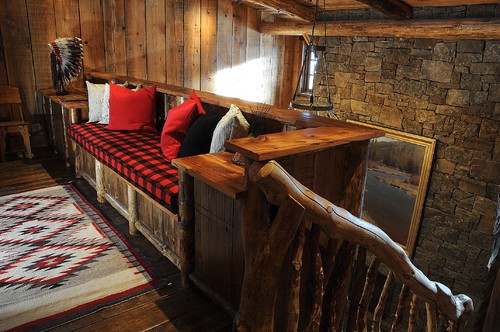
3. Checks and plaid

Photo by 

“Many people associate cabins with camping—and this leads to thoughts of picnicking,” says Basher.

A classic red-and-white-checked design, gingham, or plaid are good places to begin in your kitchen and dining areas. Plaid bedding, window treatments, and throw pillows are other ways to express the theme.

But use some restraint with certain patterns, warn the pros.

“Too many checks and plaid looks can be overwhelming and kitschy, so stick to one or two areas,” says Basher. Judicious decor is wise with a cabin theme, rather than turning your home into a literal Y camp.

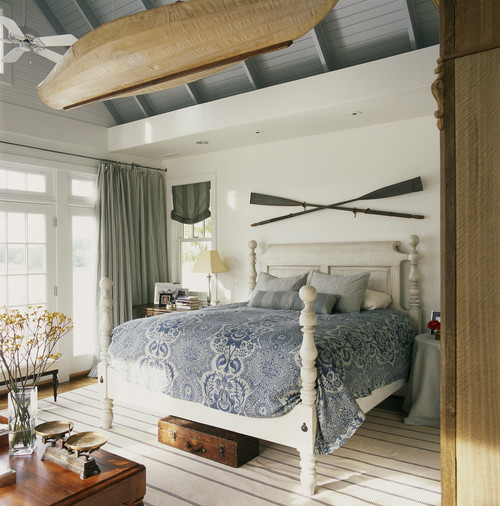
4. Games and sports

Photo by Patrick Sutton 

Outdoor activities are classic cabin fun, so bring these ideas inside when considering your decor. Try oars on the wall or used as stair railings or even grouped together to form a headboard. You can continue the motif with framed sailing flags or old life preservers.

“You can go several directions when it comes to themes for a cabin-inspired home, including fishing and sailing if you’re near the water or nature and hunting if you live in the country,” points out Basher.

Henry likes rope designs as cords to accent drapes or a mounted fish on the wall.

Fill the space above your fireplace with old water skis, snowshoes, ice skates, or badminton rackets, suggests Basher.

“Classic board games are another natural fit here—and don’t hide them. Just set one up on a shelf to enhance that cozy, family-gathering feeling,” he explains.

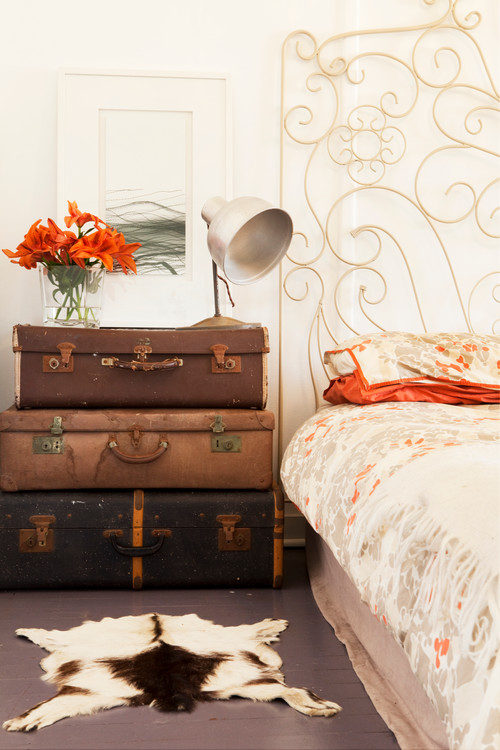
5. Trunks and suitcases

Photo by Twinkle and Whistle

Search your attic, hit up flea markets, and scour yard sales for old steamer trunks and vintage suitcases. Both can be used as decor and storage in a cabin home.

“Look for the ones with lots of landmark stickers all over them,” offers Basher. He also recommends hidden storage like a hollow faux fur ottoman, as well as armoires and hutches to corral supplies and display treasures.

Choose furniture that’s a mix of inherited pieces, estate sale finds, homemade things, and lots of personal history, says Karen Gray-Plaisted of Design Solutions KGP. “These styles help convey a feeling of warmth and relaxation,” she says.

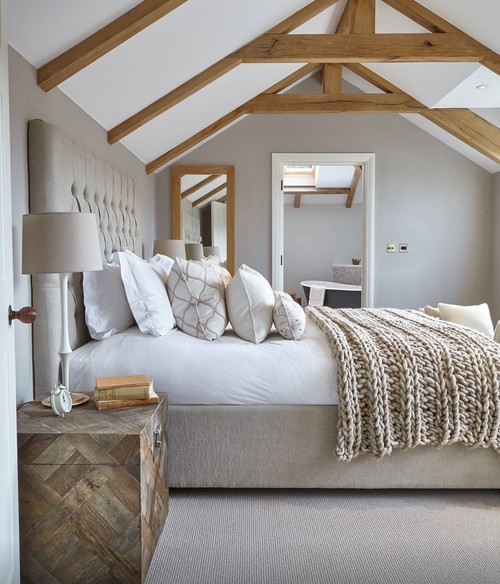
6. Cozy textures

Photo by Saviano Builders 

“There really doesn’t need to be a lot of fuss involved in decorating this type of space,” notes Gray-Plaisted. She’s seen cabins and country homes that are very Scandinavian in feel with minimal furnishings, but lots of textures, too.

Ones to consider: chunky knit blankets, cozy throws for the couch, woven baskets, flannel sheets, and soft wool rugs.

7. Animal motifs

Photo by Locati Architects

Unless you’re an avid hunter, there’s no need to go full-on taxidermy in a cabin home. But animal motifs definitely make sense here and could include antlers around a mirror, as a lamp base, or over a mantel.

Henry suggests graphic pillow patterns or framed silhouettes of bears, rabbits, and foxes.

“Make it fun and whimsical,” he suggests.

The post 7 Cozy Ways to Warm Up Your Home Decor This Fall appeared first on Real Estate News & Insights | realtor.com®.

It’s Lit! 6 Tips for Maintaining a Wood-Burning Fireplace

huePhotography/iStock

Brrr! With temperatures tumbling, there’s nothing better than nestling in some cozy blankets in front of a wood-burning fireplace. The sound of crackling wood and the heat radiating on your tootsies is just so, so comforting. However, you have to put in some work before you can relax: Your fireplace requires maintenance to ensure that it functions well and safely.

This is especially important in winter, when the risk of heating-related fires increases. Half of all U.S. home heating fires occur in December, January, and February, according to Susan McKelvey, a spokeswoman for the National Fire Protection Association.

“Make sure your heating systems are cleaned and inspected annually by a qualified professional,” McKelvey says.

Thinking about firing up the hearth? Here are six tips for maintaining your wood-burning fireplace.

1. Regularly clean the interior

Burning wood in fireplaces can release pollutants in the air and leave a buildup of dust, ash, and creosote, which can cause fires. Also watch for any accumulation of soot, which is softer than creosote, is flammable, and must be regularly cleaned from the chimney.

The NFPA recommends chimneys be cleaned at least once a year, at the beginning of winter, to remove soot and debris.

“For serious wood burners, chimney cleaning must be done as needed to avoid chimney fires. The venting systems may need to be cleaned as often as once a month,” says Rich Sedgwick, director of sales and marketing for the National Fireplace Institute.

2. Cap it

Use a wire mesh cap to cover the top of the chimney to keep birds, squirrels, rain, and other debris from entering. Some critters can mistake chimneys for trees and build nests inside them. And the last thing you want is the horrible stench of a dead animal in your house.

“The wire mesh used on the rain cap is usually a good idea but not required,” says Rick Vlahos, executive director of the NFI.

You shouldn’t have to pay more than around $80 for a quality chimney cap.

3. Check the damper

The damper is a movable plate located above the fireplace before the flue. Homeowners should make sure the damper is properly functioning—meaning no debris should be keeping it from opening and closing. This is an important component to a properly working fireplace.

In addition to dampers, Sedgwick says other fireplace components subject to wear and tear include baffles, door latches and handles, grates, and ceramic firebrick refractories.

“Warped grates need replacing, as well as any cracked ceramic refractories. Latches may need adjustment or replacement. Wooden handles eventually scorch and deteriorate [and] should be replaced,” says Sedgwick. All of these components can be taken care of by a chimney and fireplace professional.

4. Monitor for smoke

A smoke-filled house is no fun for anyone. Leaves and animal nests can create blockages that prevent smoke from escaping the chimney. Smoke can also be caused by an unclean chimney that has creosote, soot buildup, a closed or partly open damper, or wood that is not burning completely.

“Check that your chimney is properly vented to the outside to minimize the risk of carbon monoxide poisoning. Install and maintain carbon monoxide alarms to alert you if this noxious gas is in the home,” says McKelvey.

5. Choose the right wood to burn

Our experts say that hardwoods such as maple, oak, ash, and birch are the best kind of wood to burn. Those woods burn longer and hotter, have less pitch and sap, and will contribute less creosote buildup.

Vlahos says you can burn any type of untreated wood but to make sure it is properly seasoned. You’ll know your wood is well-seasoned when it fades in color, is hard, sounds hollow when you knock on it, and has loose bark. You can also use a digital moisture meter to make sure your logs are seasoned enough to burn.

“You want wood that has 20% or less moisture content,” Vlahos says.

The most effective way to dry out wood is to cut it, split it, and stack it. Hardwood will take longer to dry out than soft wood.

6. Use heatproof glass doors

Glass doors can protect against heat loss and keep embers, cinders, or logs from rolling out of the fireplace and wrecking your carpet, tile, or wood floors. You can have doors installed on the frame of your fireplace or choose a portable screen ($419, Crate & Barrel) made of tempered glass.

“Keep anything that can burn at least 3 feet away from the fireplace,” says McKelvey.

The post It’s Lit! 6 Tips for Maintaining a Wood-Burning Fireplace appeared first on Real Estate News & Insights | realtor.com®.